How to buy a used transmission: match the transmission code to your VIN, verify the donor vehicle’s mileage and history, ask about the fluid’s condition when the unit was pulled, and get the warranty and core terms in writing before you pay. A used transmission typically runs $150 to $1,500 — a full shop replacement runs $2,900 to $8,000+ (Rohnert Park Transmission, 2026).
Last updated: August 2026
A transmission is the second most expensive used part you will ever buy from a salvage yard, right behind the engine — and in one way it is the riskier purchase. Most modern automatics have no dipstick, you cannot hear a unit run on a pallet, and by the time a bad one shows itself you have already paid a shop to install it. Knowing how to buy a used transmission comes down to verifying things before money changes hands, not after.
We sell used transmissions every week at The New Country Auto Parts, a full-service salvage yard on the south side of Indianapolis, and the getting-burned stories customers bring us all rhyme: a gearbox bought by year and model instead of by code, a donor vehicle nobody asked about, a fine-print discovery about what “as-is” means. Here is what to check first, what a fair price looks like, and how the warranty actually works — the companion to our used engine buying guide, adapted for the gearbox.
Where Can You Buy a Used Transmission?
Every used transmission for sale comes from one of the same four places you would shop for any major driveline part, with very different risk attached to each:
- Full-service salvage yards. Staff match the transmission code, pull the unit, and back it with an exchange warranty. You can see the donor vehicle and ask the people who pulled it what they found. This is the lowest-risk used option — our used transmissions page shows how we handle it.
- Self-service (u-pull-it) yards. Cheapest sticker price on a junkyard transmission, but it is the hardest pull in the yard: it is pinned under the vehicle, soaked in fluid, and heavy enough to hurt you. Where coverage exists it is exchange-only, so if the unit is bad, you crawl back under a second donor.
- Online brokers and marketplaces. Sometimes the only path to a rare unit, but you cannot inspect before paying, freight on a couple hundred pounds of iron is not cheap, and returns are a project of their own.
- Private sellers. Occasionally a deal, usually a mystery. No donor records, no warranty, no recourse.
Established recyclers are a real industry with real accountability — more than 9,000 locations employing over 140,000 people nationwide (Automotive Recyclers Association, 2026). If salvage parts are new territory for you, start with our guide to buying used auto parts and come back; everything below builds on those ground rules.
How Much Does a Used Transmission Cost?
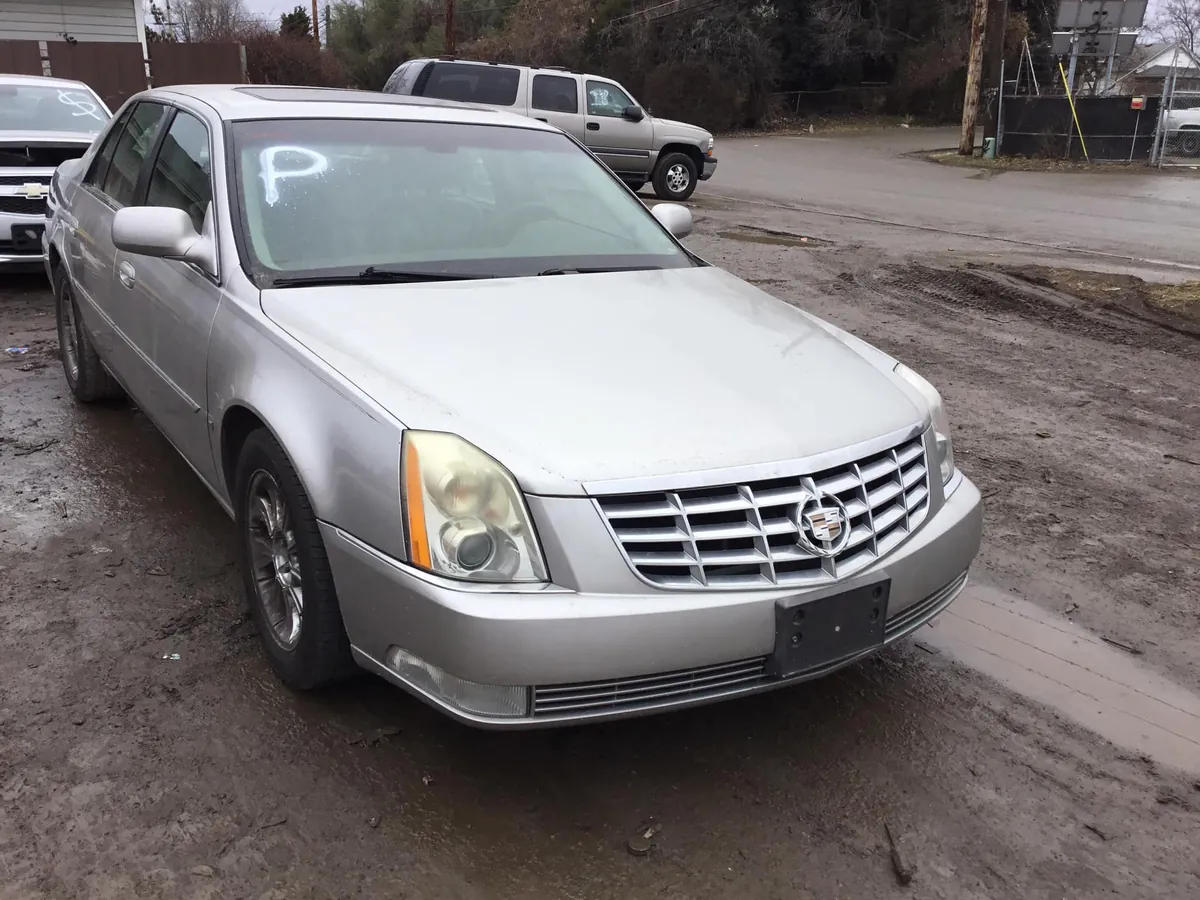
Over our counter, a used transmission runs $150 to $1,500 depending on the vehicle — a common sedan unit at the low end, a low-mileage truck or 4WD unit at the top. Recycled OEM parts as a category sell for 20-80% less than their new equivalents (Automotive Recyclers Association, 2026), and transmissions sit at the deep end of that discount because the shop alternative costs so much. Here is the market at a glance:
| Option | Typical Price | What You Get |
|---|---|---|
| Used (salvage yard) | $150–$1,500 (part only) | OEM unit pulled from a donor vehicle; exchange-style warranty at full-service yards |
| Rebuilt | $1,500–$3,500 | Worn and failed parts inside your unit replaced; quality depends on the builder |
| Remanufactured | $2,000–$4,000 | Factory-spec rebuild with updated components; longest warranties |
| Full replacement at a shop | $2,900–$8,000+ | Unit plus labor, handled end to end |
Rebuild, remanufactured, and replacement figures are national planning ranges from Rohnert Park Transmission, 2026. Why is the used range so wide? Supply and demand. Toyota and Honda units hold value because they rarely fail and everybody wants one; a common domestic automatic from a high-production year is cheap because yards are full of them. Mileage, completeness (is the torque converter included?), and whether the donor drove onto the lot move the number too. The full breakdown of what drives salvage pricing is in our used auto parts price guide.
Need a price on a specific transmission? Call The New Country Auto Parts at (317) 787-7555 with your year, make, model, and transmission code — we will check the yard while you are on the phone. See our used transmissions →
What Should You Check Before Buying a Used Transmission?
Run these seven checks on any used transmission, from any seller. None of them needs special tools — just the discipline to walk away when the answers are wrong.
- Match the transmission code, not the model year. One model year can carry two or three different transmissions depending on engine, trim, and drivetrain. The code lives on a tag or stamped pad on the case itself — check yours before calling. Then give the seller your VIN and have them confirm the interchange. A good yard does this at the counter before quoting.
- Ask for documented mileage. The donor’s odometer or title record, not a guess. Lower is better, but service history beats the odometer: a unit that got fluid changes at 120,000 miles is a safer bet than a neglected 70,000-mile one.
- Ask about the fluid that came out of it. Healthy automatic transmission fluid runs red to pink. Brown means it aged in service. Dark brown or black with a burnt smell means the clutches were cooking — Monster Transmission’s fluid color guide has the full chart. A yard that drains fluids before vehicles hit the yard, like we do, saw that fluid leave the unit. Ask what it looked like.
- Run the donor vehicle’s history. Get the donor VIN and run it through an NMVTIS-approved report, the federal title database that flags junk, salvage, and flood brands. Flood is the walk-away brand here: a modern valve body and its solenoid pack are electronics, and water kills electronics on a delay.
- Look over the case, pan, and seals. Surface grime is normal on a pulled unit. A cracked case, a caved-in pan, sealant smeared along the pan rail with no paperwork behind it, or metal glitter in any residual fluid is not.
- Ask whether the donor drove in. “Rear-end collision, drove onto the lot” is the story you want behind a transmission. “Came in on a hook, no idea why” is a coin flip.
- Get the warranty and core terms in writing. Before you pay, know the coverage window, the remedy (exchange or credit), what voids it, and what the core refund requires. Both get their own section below.
Automatic, Manual, or CVT: Does the Type Change the Buy?
It changes the odds and the homework.
Automatics are most of the market and most of the risk conversation. They run hot, heat is what kills them, and the seven checks above were written with them in mind. Manuals are mechanically simpler and usually cheaper used — but the clutch is a wear item you buy new while the gearbox is out, the same rule we lay out in car parts you should never buy used. A used gearbox with a fresh clutch is a normal, sensible pairing. CVTs deserve extra model-specific homework, because some designs have documented failure histories — next section. 4WD trucks and SUVs add the transfer case to the conversation: confirm whether it comes with the transmission or is a separate purchase.
Which Transmissions Have Known Problems?
Design matters as much as mileage. A well-kept example of a failure-prone design is still a failure-prone design, and a used one carries the same odds that put its donor in the yard. Two documented examples worth knowing:
- Nissan CVTs. Overheating and shudder from a stretched steel belt and worn pulleys are the signature failures (SlashGear, 2024). Nissan extended CVT warranty coverage on 2003-2010 vehicles, and the class actions since have centered on roughly 2013-2018 models across the Sentra, Altima, Rogue, Pathfinder, Versa, Juke, Maxima, Murano, and Quest (Top Class Actions, 2020).
- Ford’s DPS6 PowerShift, in the Focus and Fiesta through the 2010s. A dual-clutch running dry clutches instead of a torque converter, and owners logged shudder, hesitation, and lurching complaints against it model year after model year (CarComplaints).
That does not make every used Nissan or Ford unit a mistake — if you already own the car, a used replacement may still be the math that works. It means price the risk honestly: favor later revisions and updated valve bodies, and keep your path to a warranty claim short. The flip side is good news: boring, high-production conventional automatics are some of the safest used buys in the yard.
One honest limitation: nobody can see the clutch material inside a sealed unit — not you, not us. What a real yard can do is document the donor vehicle, and that is most of the game.
What Questions Should You Ask the Seller?
The answers matter, and so does how easily they come. Quick, specific answers are the mark of a yard that tracks its inventory. Dodging is data.
- What vehicle did this come out of, and why was it junked?
- What is the transmission code, and does it interchange with my VIN?
- What is the documented mileage?
- Did the donor drive onto the lot?
- Is the torque converter included?
- What is the warranty, what is the remedy, and what voids it?
- What is the core charge, and what does the refund require?
How Do Core Charges and Warranties Work on a Used Transmission?
A core charge is a refundable deposit on your old unit. Your dead transmission has rebuild value, and the deposit guarantees it comes back to the yard. At The New Country Auto Parts, a core charge is collected at purchase on transmissions unless you bring your old unit with you, and it is refunded when you return the core within 5 days. Respect the window: past 5 days, the core money stays gone and the warranty is void.
On the warranty itself, read terms, not headlines. A used transmission warranty is exchange coverage everywhere you shop — if the unit is bad you get another unit, or your money’s worth in credit, and nobody reimburses the labor you paid to install the first one. Here is ours, plainly: parts carry a 30-day warranty unless sold as-is, and as-is means no coverage and no return. A covered transmission that fails gets replaced with the same unit when we have one, or store credit equal to what you paid when we do not. Getting the vehicle to us and paying for installation are on you — true at our counter and effectively every other one. Two fine-print items to know anywhere: no cash refunds (non-defective returns carry a 30% restocking fee at our yard), and keep proof of an oil change every 3,000 miles or 3 months after installation — our engine and transmission warranty requires it.
Want the exact terms before you buy? The full warranty, core charge, and return policy is written out in plain English — read it before you spend transmission money anywhere. Read the warranty policy →
Installing a Used Transmission: Protect What You Just Saved
A lot of “bad used transmission” stories are really installation stories. Protect the swap:
- New fluid and filter, in the correct spec. Modern transmissions are picky about fluid, and the wrong spec can ruin a good unit. Match what the manufacturer calls for, not what is on sale.
- Flush the cooler and lines. If your old transmission failed and shed debris, that debris is sitting in the cooler waiting to circulate through the replacement.
- Replace the front seal and inspect the converter seating. Cheap parts, expensive do-overs.
- Use a shop that does driveline work every week. The Automatic Transmission Rebuilders Association, the industry’s trade group since 1954, runs a member-shop finder if you do not already have a wrench you trust.
- Keep every receipt. Fluid, filter, labor. Warranty claims go smoothly when the paper trail exists — and ours requires the service proof mentioned above.
How to Buy a Used Transmission in Indianapolis
If you are local, here is how it works at The New Country Auto Parts, 3013 Stanley Avenue on the south side of Indianapolis, near the Madison Avenue and Troy Avenue intersection. We keep hundreds of used cars and trucks in the yard, organized by make and model with fresh vehicles added daily, serving Indianapolis, Greenwood, Franklin, Plainfield, and the rest of Central Indiana.
Search our inventory online or call (317) 787-7555 with your year, make, model, and transmission code — inventory turns daily, so a call is the surest confirmation. Our part-pullers do the heavy work, and a transmission is exactly the pull you want handed to somebody else; if you would rather wrench anyway, ask the front desk about the self-pull discount. Parts are first-come, first-served: we cannot pull and set aside a transmission before you arrive, and holds require a down payment. Google has us at 4.7 stars across 245 reviews, which we take as a sign the checks in this guide are the same ones we run ourselves. Plan the trip on our visit page — and if the repair math on your car has stopped making sense entirely, we buy vehicles for cash too.
A used transmission is a smart buy the same way a used engine is: unforgiving of shortcuts, generous when you do it right. Match the code, document the donor, read the warranty before you pay, and install it clean — then keep the thousands you did not hand to a shop.
Ready to find your transmission? Call The New Country Auto Parts at (317) 787-7555 or stop by 3013 Stanley Ave — open Monday–Friday 8–5, Saturday 9–2. Plan your visit →
Frequently Asked Questions
How much does a used transmission cost?
At an Indianapolis salvage yard, a used transmission typically runs $150 to $1,500 depending on the vehicle, mileage, and demand. Compare that with $1,500-$3,500 for a rebuild, $2,000-$4,000 for a remanufactured unit, and $2,900-$8,000+ for a full shop replacement (Rohnert Park Transmission, 2026). Call with your transmission code for an exact quote.
How many miles is too many for a used transmission?
There is no hard cutoff — service history beats the odometer. A transmission that got regular fluid changes at 120,000 miles is a safer bet than a neglected 70,000-mile unit. Favor documented mileage from the donor’s odometer or title record over any estimate, and weigh mileage against price, since lower-mileage units rightly cost more.
Is it worth buying a used transmission?
Usually, for common vehicles. One long-running industry cost guide puts it at roughly an 80% chance of success, with about a 20% chance of a failure or problem in the first 90 days (Transmission Repair Cost Guide, 2018). The checks in this guide exist to tilt those odds further, and the savings make a used unit with a real warranty the rational first quote for most daily drivers.
Does a used transmission come with a warranty?
At a full-service yard, yes — get it in writing. At The New Country Auto Parts, transmissions carry a 30-day warranty unless sold as-is: a defective unit is exchanged for the same part, or store credit equal to what you paid if we no longer stock one. Coverage is on the part only; transport and installation stay the customer’s responsibility.
How do I know if a used transmission will fit my car?
Match the transmission code, not just year, make, and model — one model year can carry different transmissions depending on engine and drivetrain. The code is on a tag or stamped pad on the case. Give the yard your VIN and have them confirm the interchange at the counter before you pay.
Should I buy a used CVT?
Only after model-specific homework. Some CVT designs have documented failure patterns — most famously Nissan’s, where the automaker extended warranty coverage on 2003-2010 vehicles and the class actions since have centered on roughly 2013-2018 models. A used one carries the same odds that put its donor in the yard. If your model shows up on known-problem lists, compare the used price against a remanufactured unit with a multi-year warranty before deciding.
Can I return a used transmission?
Exchanges, not refunds — that is standard at salvage yards. At The New Country Auto Parts, a defective transmission is exchanged under the 30-day warranty; there are no cash refunds, non-defective returns carry a 30% restocking fee, and as-is parts are not returnable. Return your core within 5 days to get the core charge back and keep the warranty valid.