Used auto parts pricing starts with what the part costs new: salvage yards set most prices at a percentage of new retail — typically 25-50% — then adjust for demand, condition, mileage, supply, vehicle year, and rarity. Industry-wide, recycled OEM parts sell for 20-80% less than new (Automotive Recyclers Association).
Last updated: August 2026
Nobody posts the math. You call a salvage yard, ask what a door costs, get a number, and have no idea where it came from. Was that fair? High? Could the yard down the road beat it? At The New Country Auto Parts, our counter staff on the south side of Indianapolis answer the “how’d you get that price?” question every single day, so we figured we would just publish the answer.
This is the methodology post. If you want actual dollar figures for 20-plus common parts, our used auto parts price guide has the ranges. This one explains why those numbers are what they are — and why the same alternator can cost $40 off one car and $95 off another sitting two rows away.
How Do Salvage Yards Price Used Auto Parts?
A salvage yard prices a used part by starting from the new-part price and working down. The comparable new or remanufactured part sets the ceiling — nobody pays $200 used when new is $220 — and the yard sets its number as a fraction of that ceiling based on what the part is, what shape it is in, and how badly people want it.
Across our counter, most parts land between a quarter and half of what the new equivalent costs. That squares with the industry numbers: the Automotive Recyclers Association puts recycled OEM parts at 20-80% less than new, with the deepest discounts on parts that are expensive new and plentiful used. For what those percentages mean part by part — and when paying full retail is actually the right call — see our used vs. new auto parts comparison.
Two things surprise people about this system:
- It is market pricing, not markup pricing. A yard does not take what it paid for the car and add a percentage. It prices each part against what that part sells for regionally and nationally, using interchange databases that show what identical parts are listed for at other yards. More on that below.
- The car’s value and the part’s value are barely related. A vehicle we bought as scrap can carry a transmission worth several hundred dollars. That feels wrong to a lot of people, and there is a whole section on it further down, because it is the single most common pricing question we get.
Not every yard works this way. Self-service chains use a flat price list — one price per part type, any car, any year. That model is simpler, and we compare the two head-to-head later in this post.
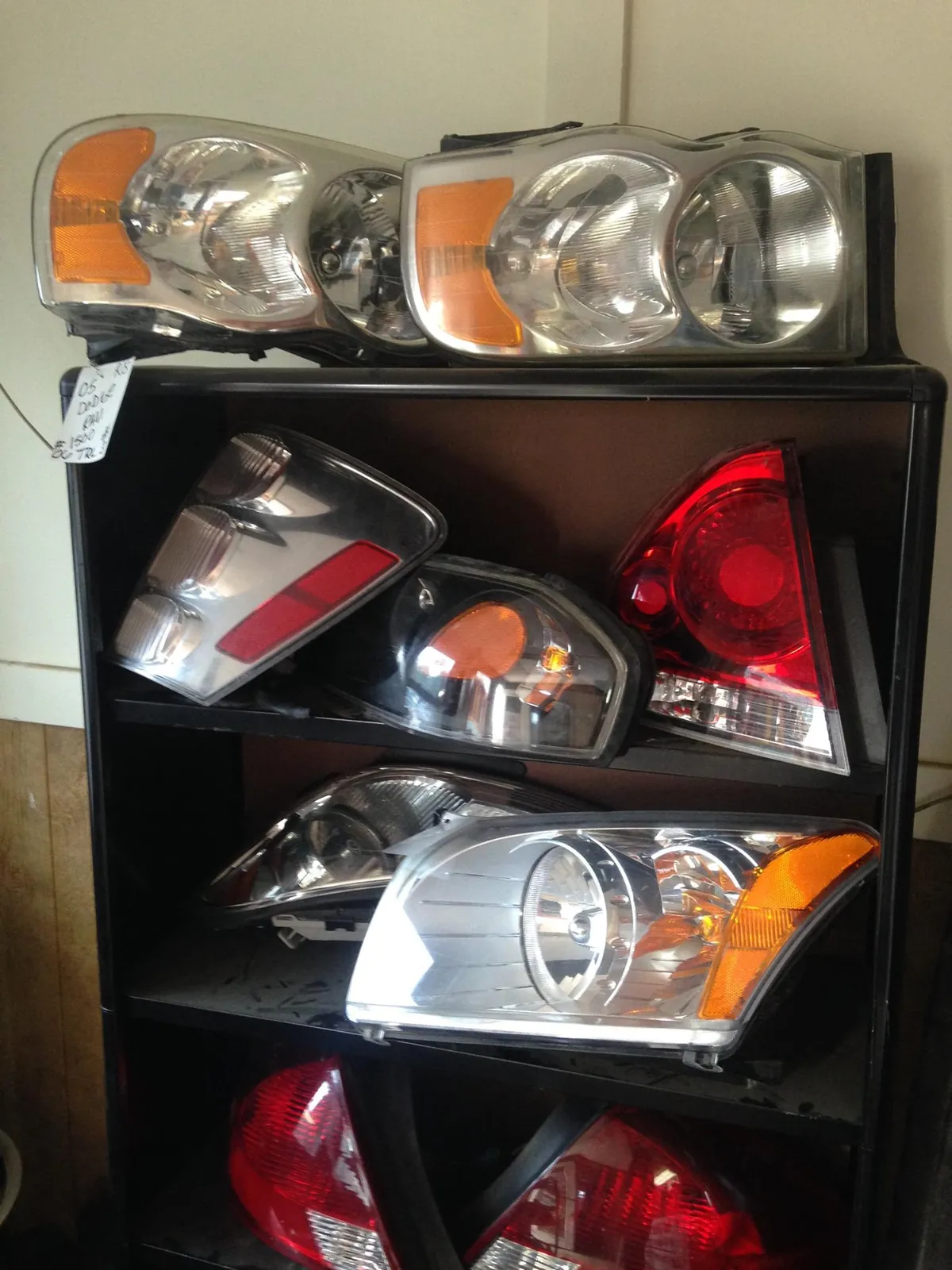
What Factors Determine the Cost of a Used Part?
Six factors move a used part’s price up or down from that percentage-of-new baseline. Here is the quick view, then the detail:
| Pricing Factor | Effect on Price |
|---|---|
| Demand for the donor vehicle | Honda, Toyota, and full-size truck parts command premiums; slow movers get discounted |
| Condition and mileage | Low-mileage, tested, clean parts price high; worn or untested parts price low |
| Local supply | Ten matching donors in the yard pushes prices down; the only one in town pushes them up |
| Vehicle year | Newer parts fit vehicles still worth repairing, so they carry higher prices |
| Rarity | Discontinued or OEM-only parts can approach — occasionally beat — new-part money |
| New-part price ceiling | Whatever the part costs new or remanufactured caps what used can charge |
Demand: Why Honda and Toyota Parts Cost More
Parts are priced by how fast they leave the shelf. Camrys, Civics, Accords, F-150s, and Silverados dominate the road, so their parts dominate the phone calls — and hold their price. An alternator for a slow-selling model might sit for a year; the yard prices it to move. The Camry version will be gone by Friday at full ask.
Demand for used parts as a category keeps climbing, and the reasons show up in the data. The average U.S. light vehicle is now 12.8 years old, up two months for the second year running (S&P Global Mobility, 2025), and owning and operating a new car now averages $11,577 a year (AAA, 2025). Older cars needing more repairs, and new cars costing that much to replace, is exactly the situation used parts exist for.
The supply side matters just as much. When new-part supply tightened during the 2019 GM plant strike, the recycling industry stepped in. As Sandy Blalock, then executive director of the Automotive Recyclers Association, put it at the time: “We want our colleagues in the repair industry and the general public to know that professional automotive recyclers across the country stand at the ready to provide quality, safe, ROE General Motors parts to get those cars back on the road.”
Condition and Mileage: The Grade on the Tag
Two identical engines are not identical. One came off a 90,000-mile car with service records and clean oil; the other came off a 210,000-mile car that sat for two years. Yards grade parts on condition and donor mileage, and the price follows the grade. This is the factor that explains most “why is yours more expensive than the other guy’s?” calls — the cheaper part is usually the rougher part. Mileage matters most on engines and transmissions, where it is the best available predictor of remaining life; our used engine buying guide covers how to read those numbers as a buyer.
Supply: How Many Matching Donors Are in the Yard
Scarcity is priced in daily. If we have ten Silverados in stock, Silverado doors are priced to sell before the vehicles get crushed. If we have the only 2014 Jetta on the south side, its parts hold firm. Because our inventory turns over daily — fresh vehicles come in from insurance companies, auctions, and direct purchases — the supply picture behind a price can genuinely change week to week.

Vehicle Year: Why the 2019 Part Beats the 2005 Part
Take the same part off the same model, fourteen years apart. A 2019 Camry alternator will price near the top of the typical $30-$100 used alternator range; the 2005 version sits near the bottom. Three reasons:
- The repair pool is bigger and richer. A 2019 Camry is a car people still spend real money fixing, and there are more of them in repair bays.
- The new-part ceiling is higher. New parts for late-model vehicles cost more, which raises the used price underneath.
- Fewer donors exist. Late-model cars reach salvage yards mostly through collisions, not old age, so the supply is thinner.
That is the honest version of “junkyard parts markup”: it is not a markup at all, it is the market for that year of car.
Rarity: When Used Costs More Than You Expected
Every yard has parts that break the percentage rule. A trim panel for a discontinued model, an OEM-only electronic module, a body panel nobody reproduces — when the manufacturer no longer sells the part, the salvage market IS the market, and prices can approach or even pass what the part once cost new. If a part for your car keeps coming back expensive everywhere you call, that is usually rarity talking, not greed. It cuts the other way too: for common wear parts, an aftermarket new part can undercut used, and some parts should not be bought used at all.
Want a real number instead of a theory? Call The New Country Auto Parts at (317) 787-7555 with your year, make, and model — we price parts off live market data and tell you the number straight. See our used parts →
What Is a Hollander Interchange Number?
A Hollander interchange number is the ID system behind nearly every used-part price in America. The Hollander Interchange, first compiled in 1934 and still the most widely used database for identifying interchangeable auto parts, assigns one number to each group of parts confirmed to be interchangeable — so a yard knows that the alternator from a Pontiac Vibe fits a Toyota Matrix, and that both can serve a buyer who asked for neither.
For pricing, the interchange number does two jobs:
- It defines the real supply. The price of “your” part is not set by how many of your exact car exist — it is set by every vehicle that shares the interchange number.
- It creates market comps. Yards can see what parts under the same number are listed for at recyclers nationwide, with mileage and grade attached, and price against the going rate the way a realtor prices a house.
This is why used auto parts pricing is more standardized than most buyers assume. When we quote you a price, it reflects what that interchange number trades for across a national market of more than 9,000 recycling locations (Automotive Recyclers Association) — not a number pulled from the air.
Why Does a $200 Part Come From a $500 Car?
This is the question behind half the pricing complaints in this business, so here is the straight answer. The $500 was the price of the whole car as scrap — one buyer, sold by weight and drivetrain, in whatever condition it rolled in. The $200 is the price of one working, warrantied part out of the dozens that car contains, delivered after the yard did its work:
- Bought, towed, and titled the vehicle (here is what yards actually pay and why)
- Drained and recycled every fluid, recovered the freon, pulled the mercury switches and the battery
- Inventoried the parts, graded them, and stored the vehicle in an organized row
- Pulled the part, tested what could be tested, and backed it with a warranty
A car is worth more as parts than as a car — that spread is the entire business model, and it is also why the yard can pay you cash for a dead vehicle at all. The two prices are set in two different markets. If you have a car worth more dead than alive, that same math works in your favor when you sell it to the yard.
Self-Service vs. Full-Service: Two Different Pricing Models
The other thing that scrambles price comparisons: the two kinds of yards do not price the same way, on purpose.
| Self-Service Yard | Full-Service Yard | |
|---|---|---|
| How prices are set | Flat price list — one price per part type, regardless of make, model, or year | Each part priced individually off interchange market data |
| Labor | You find it and pull it yourself | Staff locate, pull, and check the part |
| Condition pricing | Same price whether the part is pristine or rough | Grade and mileage reflected in the price |
| Sticker price | Lower | Higher, with the labor and checking built in |
| Best for | Cheap common parts, DIYers with tools and time | Big-ticket parts, exact fitment, anyone who values their Saturday |
Neither model is a scam; they are different products. A flat-rate yard charges Camry-alternator money for a rare part (great deal) and rare-part money never (they price for the average). A full-service yard charges what each part is worth (fair, but no lottery tickets). Our full comparison of the two models is in self-service vs. full-service salvage yards. We run full-service with a twist: part-pullers on staff do the work, and if you would rather pull it yourself, ask the front desk about the self-pull discount.
How Used Auto Parts Pricing Works at The New Country Auto Parts
We are the full-service model, priced the way this post describes, with a few specifics worth knowing before you call:
- Quotes are live. Search our inventory online or call (317) 787-7555 with your year, make, and model, and we quote off what is actually in the yard — hundreds of vehicles, all makes and models, with fresh inventory added daily.
- The warranty is part of the price. Parts carry a 30-day warranty unless sold as-is. If a covered part is defective, we replace it — or issue store credit for what you paid if we no longer have one. No cash refunds, and a 30% restocking fee applies to non-defective returns. The warranty covers the part itself; getting the vehicle to us and installation are on the customer.
- Core charges are separate. Engines, transmissions, alternators, and similar parts carry a core charge at purchase, refunded when you return the old unit within 5 days.
- Payment: Visa, Mastercard, Amex, and cash.
We serve DIYers, shade-tree mechanics, and body shops from Indianapolis, Greenwood, Franklin, and across Central Indiana, and our 4.8-star Google rating across 320+ reviews mostly comes down to one habit: telling people the real number and how we got it. That is what this post was.
Ready to price your part? Visit The New Country Auto Parts at 3013 Stanley Ave, Indianapolis — Mon–Fri 8–5, Sat 9–2 — or call (317) 787-7555 for a quote in minutes. Plan your visit →
Frequently Asked Questions
How are used auto parts priced at a salvage yard?
Salvage yards price each part as a percentage of the comparable new-part price — typically 25-50% of new retail — then adjust for the donor vehicle’s demand, the part’s condition and mileage, how many matching vehicles are in local supply, the vehicle’s year, and rarity. Most yards check prices against national interchange market data rather than inventing numbers.
What percentage of the new price should a used part cost?
Recycled OEM parts sell for 20-80% less than comparable new parts, according to the Automotive Recyclers Association. Most parts land at 25-50% of new retail. Expect the deep-discount end on common, plentiful parts like starters and mirrors, and the shallow end on late-model, high-demand, or scarce parts like recent-year engines.
Why do parts from newer cars cost more at a junkyard?
Three reasons: more people are still investing in repairs for that vehicle, the new-part price that caps the used price is higher, and fewer late-model donors exist because newer cars usually reach salvage through collisions rather than age. A 2019 Camry alternator prices near the top of the used range; a 2005 near the bottom.
Can you negotiate prices at a salvage yard?
Usually less than people hope. Self-service chains use fixed price lists with no negotiation, and full-service yards price off interchange market data, so quotes already track the going rate. Your real levers are asking about self-pull discounts, buying complete assemblies instead of pieces, and accepting a cosmetically rough part for a mechanical job.
Why is a used part sometimes more expensive than a new aftermarket part?
Because they are different products. The used part is original equipment — built by the manufacturer to factory spec — while a budget aftermarket copy may vary in fit and quality. For rare or discontinued parts, salvage is often the only OEM source left, which holds prices up. For common wear items, aftermarket new can legitimately be the better buy.
Does a used part’s price include a warranty?
At full-service yards, usually yes. At The New Country Auto Parts, parts include a 30-day warranty unless sold as-is: a defective part is replaced, or refunded as store credit if no longer in stock. Core charges on engines, transmissions, and alternators are separate and refunded when you return the old unit within 5 days.