Used auto parts are the smart buy when a part is expensive new and does not wear out by design: engines, transmissions, doors, body panels, lights, and mirrors. Recycled OEM parts cost 20-80% less than new (Automotive Recyclers Association). Buy new for wear items and safety parts — brake pads, rotors, belts, and airbags.
Last updated: August 2026
Repair bills keep climbing. Motor vehicle repair prices rose 23% in a single year in 2023 — roughly four times the rate of overall inflation (Bureau of Labor Statistics data via LookupAPlate, 2025). Meanwhile the average car on American roads is now 12.8 years old (S&P Global Mobility, 2025). Older cars need more parts, and parts cost more than they used to. So the used vs new auto parts question lands on our counter every single day: which repairs can you fix with a $60 salvage part, and which ones justify full retail?
We sell used parts for a living at The New Country Auto Parts on the south side of Indianapolis, so you would expect us to say “buy used, always.” We won’t. Some parts should never come out of a salvage yard, and we name them below. But for most repairs on most vehicles — especially anything past its warranty years — a used OEM part is the same part your car was built with, at a fraction of the price.
Used vs. New Auto Parts: The Quick Verdict
Buy used when the part is expensive new and does not wear out by design. Buy new when the part is built to wear out, or when it is a one-time safety device. That one sentence settles most of the debate. Here is how it breaks out in practice:
Choose used parts if:
- The part is structural or cosmetic: doors, fenders, hoods, bumpers, mirrors, glass
- It is a major assembly that costs four figures new: engine, transmission, transfer case
- The vehicle is old enough that new OEM parts are discontinued or on backorder
- The car is out of warranty and the repair has to make financial sense
Choose new parts if:
- It is a wear item on a replacement schedule: brake pads, rotors, filters, belts, hoses, wiper blades
- It is a single-use safety device: airbags, seat belt pretensioners
- It is a catalytic converter — they are federally regulated and generally cannot be reinstalled, so reputable yards do not sell them for road use
- The labor bill is so steep you never want to do the job twice on a newer, low-mileage car
Our used auto parts buying guide covers the full decision process, including how to confirm fitment before you spend a dime.
How Much Cheaper Are Used Auto Parts?
Recycled OEM parts sell for 20% to 80% less than their new equivalents (Automotive Recyclers Association). The savings are biggest exactly where repair bills hurt most: major assemblies and body parts. Here are ten common repairs compared across all three tiers. Used ranges are the counter figures from our own used auto parts price guide. The remanufactured column and the new prices for engines, transmissions, and radiators are our in-house comparisons from the same guide; every other new-part figure comes from an outside pricing source cited below the table.
| Part | Used (Salvage) | Remanufactured | New |
|---|---|---|---|
| Engine (complete) | $300 – $2,500 | $2,500 – $5,500 | $4,000 – $12,000 |
| Transmission | $150 – $1,500 | $1,300 – $3,400 | $1,800 – $3,400+ |
| Alternator | $30 – $100 | $80 – $250 | $100 – $2,500 |
| Starter | $25 – $80 | $50 – $350 | $80 – $350 |
| Radiator | $40 – $150 | Rarely remanufactured | $300 – $500 |
| A/C compressor | $40 – $200 | — | $200 – $1,000 |
| Headlight assembly | $30 – $250 | — | $75 – $400 |
| Door (complete assembly) | $75 – $400 | — | $500 – $2,500 (installed) |
| Side mirror | $20 – $100 | — | $35 – $800 |
| Fender | $50 – $300 | — | $300 – $1,000+ (installed) |
New-part sources: alternator (TheCostGuys, 2026), starter (TheCostGuys, 2026), A/C compressor (TheCostGuys, 2026), headlight assembly (TheCostGuys, 2026), door replacement (Lemonade, 2026), side mirror (CarBuzz, 2024), and fender (Jerry, 2024). New figures are for the part alone except the door and fender rows, which the sources price as finished installed jobs. A dash in the remanufactured column means reman units for that part are uncommon or were not priced in our sources.
Look closely at the door row, because it hides the biggest trap in the comparison. A new door usually arrives as a bare shell — the list price on a rear door shell for a 2016 Toyota Highlander is $766, with no window, no internal parts, and no door panel (iSeeCars, 2021). A used door from a salvage yard comes complete — often already in your color. You are not comparing like for like; the used part is frequently the more finished product.
Want a price on your exact part? Call The New Country Auto Parts at (317) 787-7555 with your year, make, and model. We’ll check the yard while you’re on the phone, and every part (except items sold as-is) carries a 30-day warranty. See our used parts →
When Buying Used Auto Parts Is the Smart Move
A used OEM part was made by the same manufacturer, on the same tooling, to the same spec as the part it replaces. It is not a copy or a budget version — it is the original, pulled from another vehicle. That is why the categories below tilt so heavily toward used.
Engines, Transmissions, and Major Assemblies
This is where a salvage yard saves you thousands, not tens. A used engine runs $300 to $2,500 against $4,000 to $12,000 new, and the used unit spent its life proving it runs. The rules for buying one well — matching the engine code, checking mileage, asking about the donor vehicle — are in our used engine buying guide and used transmission buying guide.
Body Panels, Doors, and Glass
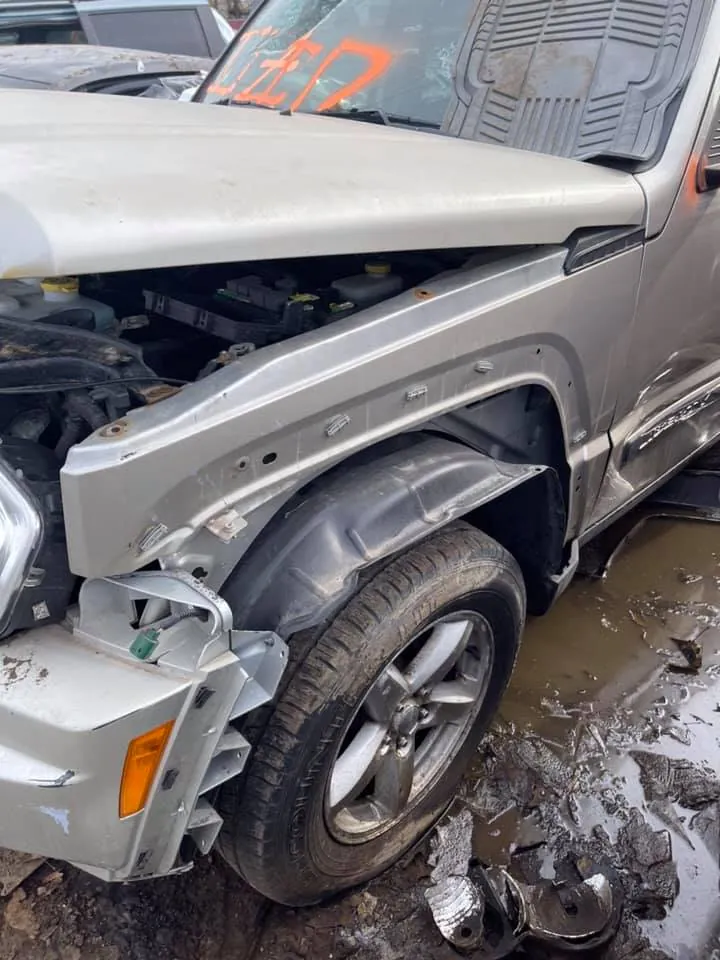
Fenders, hoods, doors, bumpers, tailgates. None of these wear out; they either fit or they got hit. A used panel in your factory color can skip the paint step entirely — roughly $200 of the job on a door (iSeeCars, 2021) — and as the table shows, used doors arrive complete instead of as empty shells. For collision fixes on an out-of-warranty car, used body parts are the closest thing to free money in auto repair.
Lights, Mirrors, and Trim
A plain manual mirror is $40 new, but add heat, blind-spot monitoring, or auto-dimming and the part alone tops out around $700 to $800 (CarBuzz, 2024). The used version off the same model is $20 to $100. Headlight assemblies, tail lights, interior trim, radio bezels, seat switches — these are pass/fail parts. If they work and the lens is clear, they will keep working.
Anything the Manufacturer Stopped Making
With the average vehicle now 12.8 years old, millions of cars have outlived their parts support. For a 2009 pickup, the salvage yard is not the cheap option — it is often the only option for a true OEM part.
Which Auto Parts Should You Always Buy New?
Here is the honest half of the comparison, and it is the part a lot of yards skip.
Wear items are engineered to be consumed: brake pads, rotors, filters, belts, hoses, spark plugs, wiper blades. A used brake pad is somebody else’s leftovers — the savings are maybe $15 and the stakes are your stopping distance. Bad deal every single time. The same logic applies to single-use safety hardware: airbags and seat belt pretensioners fire once, and you have no way to verify their history. And catalytic converters are off the table entirely — they are federally regulated and generally cannot be reinstalled, so we do not sell them for road use. Their value is in the precious metals inside, which is where ours go.
Our full list, with the reasoning for each part, is in the car parts you should never buy used.
Is It Safe to Buy Used Auto Parts?
Yes — from a real salvage yard, a used OEM part is generally as safe as new for non-wear components, because it is the same manufacturer’s part. The risk was never “used.” The risk is unknown history, and a professional yard manages that risk for you: donor vehicles are drained and processed before parts are pulled, parts are matched to your vehicle by interchange data, and a warranty backs the sale.
The industry’s case is straightforward. According to Vince Edivan, Executive Director of the Automotive Recyclers Association, “The ability for vehicle owners to choose recycled parts is becoming more important every year.” With repair prices rising several times faster than overall inflation, that option is what keeps older cars on the road at all.
Two honest caveats. First, nobody can tell you everything about a used part’s past — that is what the warranty exists to cover. At The New Country Auto Parts, parts carry a 30-day warranty unless sold as-is: if a covered part is defective, we replace it, or issue store credit for what you paid if we no longer have one. The warranty covers the part itself — getting the vehicle to us and installation are on you, so factor labor into your math. (For the labor side and every other lever, see our guide to saving money on car repairs in Indianapolis.) Second, buy from a yard you can look in the eye. Buying sight-unseen from a random online seller is where most used-part horror stories actually come from.
The False Economy Question: Does Cheap Now Cost More Later?
Run the numbers instead of guessing. A used alternator is $30-$100. The new part runs $100 to $2,500 depending on the vehicle (TheCostGuys, 2026), and Kelley Blue Book puts the average alternator replacement at $747 to $842 once labor is in (Kelley Blue Book, 2026). Even if the used unit only lasted half as long — and tested units usually do far better — you would still come out hundreds ahead. On parts like that, the false economy argument fails on arithmetic.
But the concern is legitimate in two situations. On high-labor jobs, the part is only part of the invoice: an A/C compressor replacement takes 2-6 hours of labor and typically runs $400-$1,200 all-in (TheCostGuys, 2026), so a failed gamble means paying the labor bill twice. Pick the lowest-mileage donor you can and let the warranty period do its job before you count the savings. And on wear items, “cheap now” is always “again soon” — which is why we told you to buy those new.
There is also a point where the smart move is no part at all. When a repair estimate clears what the vehicle is worth, stop patching and sell the car — we buy vehicles in any condition, and yours becomes the donor car that saves the next person money. Curious how yards set those part prices in the first place? We published the whole methodology in how used auto parts are priced.
Buying Used Auto Parts in Indianapolis
The New Country Auto Parts keeps hundreds of vehicles — domestic, European, Japanese, and Korean — at 3013 Stanley Avenue on the south side of Indianapolis, with fresh inventory added daily. You do not need tools or a free Saturday: our part-pullers find the part, pull it, and bring it to the counter. Want to save more and pull it yourself? Ask the front desk about the self-pull discount. You can search our inventory online or call (317) 787-7555 to confirm what is in the yard today.
We serve DIYers, shops, and body shops across Indianapolis, Greenwood, Plainfield, Franklin, and the rest of Central Indiana, and customers have rated the experience 4.8 stars across 320+ Google reviews. Hours are Monday-Friday 8 AM to 5 PM and Saturday 9 AM to 2 PM; here is what to expect when you visit.
Ready to price the used option? Call The New Country Auto Parts at (317) 787-7555 or stop by 3013 Stanley Ave — our part-pullers will handle the dirty work. Plan your visit →
Frequently Asked Questions
Are used auto parts as reliable as new parts?
For non-wear components, generally yes. A used OEM part was built by the same manufacturer to the same specification as the new one — it is the original part, not a copy. Recycled OEM parts cost 20-80% less than new (Automotive Recyclers Association), and reputable yards inspect parts and back them with warranties. Reliability concerns belong to wear items, which you should buy new.
How much money do you save buying used auto parts?
Typically 20% to 80% off the new price, per the Automotive Recyclers Association. The dollar savings scale with the part: a used alternator runs $30-$100 against an average $747-$842 shop replacement (Kelley Blue Book), while a used engine at $300-$2,500 can save $3,000-$9,000 or more against a $4,000-$12,000 new unit. Savings are largest on major assemblies and body parts.
Which car parts should you never buy used?
Skip used wear items and safety devices: brake pads and rotors, filters, belts, hoses, wiper blades, airbags, and seat belt pretensioners. Used catalytic converters are federally regulated and generally cannot be reinstalled, so reputable yards do not sell them for road use. These parts are either designed to be consumed or impossible to verify, and the used savings on them are small anyway.
Is it cheaper to buy a used engine or a remanufactured one?
Used is much cheaper up front: $300-$2,500 for a used engine versus $2,500-$5,500 remanufactured. A reman engine has new internal components and usually a longer warranty, which can make sense for a vehicle you plan to keep many years. For most out-of-warranty repairs, a low-mileage used engine with a matching engine code delivers the better math.
Do used auto parts come with a warranty?
At The New Country Auto Parts, parts carry a 30-day warranty unless sold as-is. If a covered part is defective, we replace it — or issue store credit for what you paid if the part is no longer in stock. The warranty covers the part only; the customer handles transportation and installation. Always ask any yard for its warranty terms in writing before buying.
Why does a used door cost less than a new door but include more?
A new replacement door is usually sold as a bare shell — a rear door shell for a 2016 Toyota Highlander lists at $766 with no glass, no internal parts, and no door panel (iSeeCars, 2021). A used door assembly at $75-$400 comes off a donor vehicle complete with all of those parts installed, often already in your factory color. You pay less and buy fewer separate pieces.