Used OEM wheels are factory-original wheels pulled from salvaged vehicles and resold for a fraction of dealership cost. Because they were built for your exact model, the bolt pattern, offset, center bore, and load rating already match. At The New Country Auto Parts in Indianapolis, used OEM wheels run 50-75% less than the same wheel new from a dealer.
Last updated: October 2026
A curb, a pothole, or a previous owner’s bad luck — it takes about two seconds to ruin a factory wheel, and the replacement quote from the dealership parts counter takes about two seconds to ruin your week. A new factory wheel is a dealer-only part at a dealer-only price, and nobody shops for one until they have to.
There’s a better route, and we sell it every day. A used OEM wheel is the same casting, same part number, and same fit the automaker engineered — pulled from a donor car that doesn’t need it anymore. This guide covers what the markings on the back of the wheel mean, what to inspect before you pay, and where to find used factory wheels in Indianapolis.
What Is an OEM Wheel?
An OEM (original equipment manufacturer) wheel is the wheel your vehicle wore when it rolled off the assembly line — built by the automaker’s approved supplier, stamped with a factory part number, and validated against that specific vehicle’s weight and performance targets. Factory wheels are fatigue-tested and impact-tested against published engineering standards: SAE J328 sets the radial and cornering fatigue requirements for passenger car and light truck wheels (SAE International, 2021), and SAE J175 is the lateral impact procedure for exactly the event that kills most wheels — hitting a curb (SAE International, 2023).
A used OEM wheel is simply that same factory wheel recovered from a salvaged vehicle. The casting doesn’t forget its engineering because the car got totaled. If the wheel is straight and crack-free, it is the wheel your car was designed around.
Why does factory fit matter on a wheel?
Four measurements have to be right, and on a factory wheel they already are:
- Bolt pattern — the number of lugs and the circle they sit on. No adapters, no wobble bolts.
- Center bore — factory wheels are hubcentric, meaning the wheel seats on the hub itself rather than hanging its weight on the lug studs.
- Offset — how far the mounting face sits from the wheel’s centerline. Offset preserves your steering geometry and keeps bearing loads where the engineers put them.
- Load rating — matched to the vehicle’s gross weight from day one.
Get any of those slightly wrong and you buy vibration at highway speed, chewed-up wheel bearings, or fender rub at full lock. Get them all right by default — that’s the whole argument for OEM.
Used OEM vs. New OEM vs. Replica Wheels: What’s the Difference?
Replica wheels are third-party castings styled to look like the factory design, and the reputable brands put them through validation testing. Counterfeit and fake wheels are a different animal: their producers are not obligated to any testing protocols and are putting your safety at risk, and counterfeiters have been caught faking the stamping on the back to look genuine (Automoblog, 2016). From the outside, a fake and the real thing look nearly identical. That’s exactly why they’re risky to buy sight unseen.
| Used OEM | New OEM (dealer) | Replica / aftermarket | |
|---|---|---|---|
| What it is | Original factory wheel from a salvaged vehicle | Original factory wheel, ordered new | Third-party wheel styled to mimic the factory design |
| Fitment | Exact — same part your car shipped with | Exact | Close, but center bore and offset often differ; may need hub rings |
| Testing | Validated to the automaker’s spec when built | Validated to the automaker’s spec | Reputable brands validation-test; counterfeits are tested by nobody |
| Finish match | Matches your other three wheels | Matches | Slightly off in color, machining, or logo details |
| Price | Lowest — typically a fraction of new | Highest by far | In between |
Our take: if you’re replacing one damaged wheel on a car you plan to keep stock, a used factory wheel wins. It matches the other three, fits without workarounds, and costs the least of the three options. In practice, buying used is the only way to get a genuinely cheap OEM wheel — it’s the same part number either way, and only the price changes.
One honest caveat: if you want a custom look, a wider setup, or lightweight forged wheels for a track car, quality aftermarket is the right path — that’s a different purchase than what this guide covers.
Looking for a factory wheel that actually fits? Tell us the year, make, and model and we’ll check the yard. Call (317) 787-7555 or send us the details →
How to Read the Markings on a Used OEM Wheel
Flip a factory wheel over and it tells you almost everything. The size and fitment stamps live on the back of the spokes or inside the barrel, not on the face — and the load capacity is stamped back there too (Wikipedia: Wheel sizing, 2026). A typical stamp reads something like 7J x 16 H2 5/120 ET47:
- 7 — rim width in inches
- J — bead seat profile (J is standard on passenger cars)
- 16 — rim diameter in inches
- H2 — flange hump type that keeps the tire bead seated
- 5/120 — bolt pattern: five lugs on a 120 mm circle
- ET47 — offset in millimeters, from the German Einpresstiefe (“press-in depth”)
The other stamp that matters is the OEM part number, usually cast or stamped near the valve stem or the center bore. Here’s how to use the markings to confirm a match:
- Get your target specs. Photograph the stamps on your damaged wheel, or read the tire placard in the driver’s door jamb for the factory size.
- Match the part number when you can. Same part number means same wheel, period.
- Match the specs when you can’t. Automakers change wheel designs between model years, so a different part number can still fit — as long as diameter, width, bolt pattern, offset, and center bore all line up.
How to Inspect a Used Wheel Before You Buy
A used wheel’s history is written on it. Six checks, in order:
- Sight down the barrel. Rest the wheel face-down and look across the inner lip from a low angle. Waves or flat spots mean a bend. Bent wheels cause vibration and slow air leaks.
- Hunt for cracks. Check where the spokes meet the barrel, around the lug holes, and the back lip — the three places impact damage shows up. Any crack is a walk-away.
- Look for repair evidence. Fresh weld beads, ground-down patches, or paint overspray on the inner barrel mean the wheel was straightened or welded. We don’t sell wheels we’d flag that way, and we wouldn’t put one on our own cars.
- Check the center bore and mounting face. Heavy corrosion where the wheel seats against the hub can cause vibration even on a straight wheel. Light surface rust cleans up; flaking buildup doesn’t.
- Judge curb rash honestly. Scraped paint on the lip is cosmetic — it’s also why the wheel is cheap. A gouge deep enough to catch a fingernail hard, on the bead area, is a different story.
- Ask about the TPMS sensor. Many wheels come with the tire pressure sensor still installed. If it’s missing or dead, budget for a sensor and a reprogram at the tire shop.
The advantage of buying from a full-service yard is that you do all of this in person, with the wheel in your hands, before any money moves. At The New Country Auto Parts, our part-pullers bring the wheel to you — or you can pull it yourself and save more with the self-pull discount. Either way, every part we sell that isn’t tagged as-is is covered by our 30-day warranty: free replacement if it fails and we have the same part, or store credit for what you paid if we don’t. Used tires are the exception — those sell as-is, priced on the tread that’s left.
Why Do So Many Drivers End Up Replacing a Wheel?
One word: potholes. One in ten U.S. drivers sustained vehicle damage bad enough to need a repair after hitting a pothole in 2021, and at an average of almost $600 per repair, pothole damage cost American drivers $26.5 billion that year (AAA, 2022).
“When a vehicle hits a pothole with any kind of force, the tires, wheels and suspension get the brunt of the impact and fixing any of those items is pricey,” says Lloyd Albert, Senior Vice President of Public and Government Affairs at AAA Northeast (2022).
Indianapolis does its part. Central Indiana winters cycle above and below freezing for months, and that freeze-thaw pattern is precisely how pavement cracks become craters. Every spring, drivers show up at our counter with a bent rim in the trunk. A straight used factory wheel turns that repair back into a bolt-on job — call the counter with your year, make, and model and we’ll quote what’s in the yard.
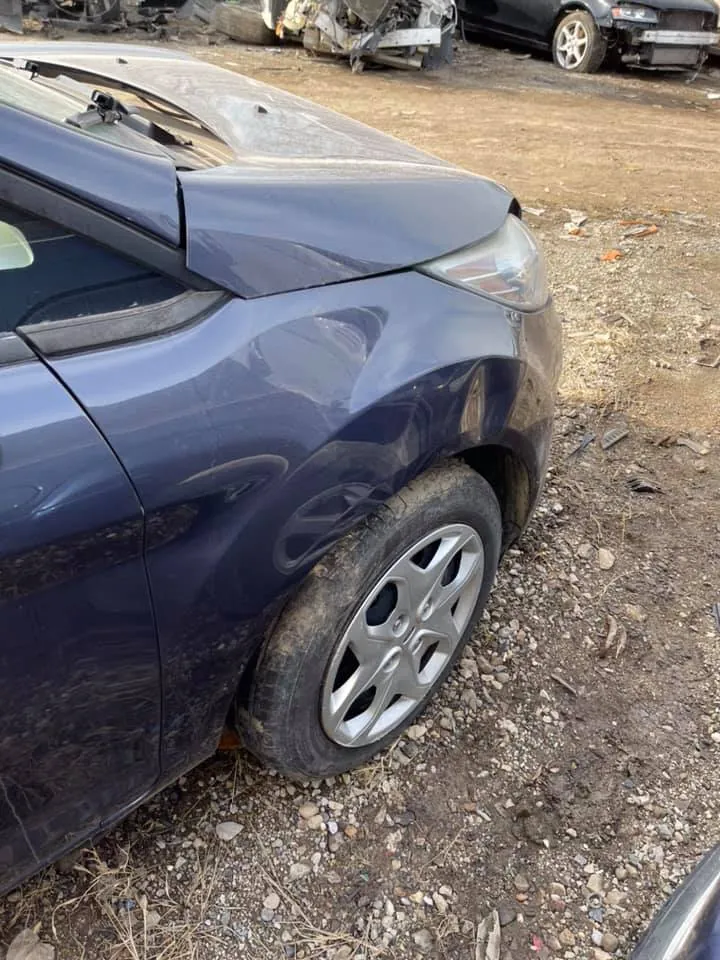
Pothole got your wheel? Bring the damaged one with you — we’ll help you match the stamps to a straight replacement. Plan your visit →
Where to Find Used OEM Wheels Near Me in Indianapolis
Salvage yards are where factory wheels come back on the market, and the supply logic works in your favor: most totaled cars are totaled by collision damage to one area, which leaves two or three corners untouched. The New Country Auto Parts keeps hundreds of vehicles in stock at 3013 Stanley Avenue on the south side of Indianapolis, with fresh inventory added daily — from insurance companies, tow companies, auctions, and owners who sell us the car outright through our sister company Cash Car Heroes. Saleable wheels get routed to our sister business Papa Wheelies, also on Stanley Avenue, and resold as used OEM. Wheels, tires, and suspension is a standing category at the parts counter.
What that looks like in practice:
- All makes and models — domestic, European, Japanese, Korean. One wheel or a full set.
- Full-service pulling — tell the counter what you need and our part-pullers do the work. DIYers can ask about the self-pull discount instead.
- Inspect before you pay — every check in the section above, done with the wheel in front of you.
- 30-day warranty — free replacement or store credit on covered parts (as-is parts excluded).
- 4.8 stars across 320+ Google reviews — fast service and fair prices are the two things customers mention most.
Hours are Monday to Friday 8am-5pm and Saturday 9am-2pm, closed Sunday. Wheel inventory turns over constantly, so call (317) 787-7555 before you drive over — and if you’re new to buying from a yard, our guide to buying used auto parts and our rundown of where to buy used auto parts in Indianapolis are both worth ten minutes. Still weighing new against used across the whole repair? Start with OEM vs. aftermarket vs. salvage parts.
Frequently Asked Questions
Are used OEM wheels safe?
Yes, if they pass inspection. A used factory wheel was validated to the automaker’s load and impact spec when it was built, and a straight, crack-free example keeps that engineering. The risks are bends, cracks, and bad weld repairs — all visible on inspection. Check the barrel, spokes, and lug area before buying, and buy where you can see the wheel first.
How much do used OEM wheels cost?
It depends on diameter, finish, and how rare the design is — a 16-inch steel wheel and a 20-inch machined alloy are different purchases. As a rule, used OEM wheels sell for a fraction of the dealership price for the same part number. At The New Country Auto Parts, call (317) 787-7555 with your year, make, and model for a price on what’s in the yard.
How can I tell if a wheel is genuine OEM?
Check the back. Factory wheels carry a stamped automaker part number, size markings, and the maker’s logo cast into the rear of the spokes or barrel, with crisp and consistent stamping. Replicas usually lack the automaker part number entirely. A magnet is a quick alloy check: aluminum factory alloys are non-magnetic, so a magnet sticking means steel.
Can I buy just one wheel instead of a set?
Yes — that’s the most common wheel purchase at a salvage yard. Since you’re buying the same factory casting, one used OEM wheel blends in with your other three in finish and design. Match the part number, or match diameter, width, bolt pattern, offset, and center bore if the part number differs between model years.
Will a used OEM wheel fit my car?
If it carries your wheel’s part number, yes. Otherwise, match five specs: diameter, width, bolt pattern, offset, and center bore. Your factory size is printed on the tire placard in the driver’s door jamb, and the wheel’s specs are stamped inside its barrel. When specs match, a used factory wheel bolts on exactly like the original.
Do used wheels come with a warranty?
Yes — at The New Country Auto Parts every covered part carries a 30-day warranty. If it fails in that window we replace it free when we have the same part, or issue store credit for what you paid if we don’t. Parts sold as-is are excluded and can’t be returned or exchanged. Exchanges cover defective parts only, and a 30% restocking fee applies to non-defective returns.
A bent wheel feels like a big repair, but it’s one of the easiest fixes in the used-parts world: read the stamps, inspect the replacement, bolt it on. Factory fit, half the sting.
Get factory fit at half the price. Hundreds of vehicles, all makes and models, fresh inventory daily. See what we stock →