In the OEM vs aftermarket parts debate, there is a third option most guides skip: used OEM salvage parts. New OEM wins for safety-critical and warranty-covered repairs. Aftermarket wins for wear items like pads, filters, and belts. Used OEM salvage wins for body panels, engines, transmissions, and lights — the same factory part at 20-80% less (Automotive Recyclers Association).
Last updated: August 2026
Every replacement part you can buy comes from one of three places. The company that built your car (new OEM). A third-party manufacturer that copied the part (aftermarket). Or another car just like yours that got wrecked or retired (used OEM, which is what we sell at The New Country Auto Parts in Indianapolis). Most articles compare the first two and pretend the third does not exist. That is a strange omission, because for a lot of repairs the used OEM part is both the cheapest and the closest to what the factory installed.
This guide compares all three on quality, fitment, price, warranty, and availability, prices ten common parts across every source, and tells you which one to buy for each kind of repair. We sell used parts, so we have a horse in this race. We also tell you exactly where aftermarket and new OEM beat us.
OEM vs Aftermarket vs Used Salvage Parts: The Quick Verdict
Buy new OEM when the part is safety-critical or a manufacturer warranty matters more than price. Buy aftermarket for wear items that are cheap and replaced on a schedule. Buy used OEM salvage for anything that does not wear out by design and costs real money new — body panels, major assemblies, lights, mirrors, and modules.
- Choose new OEM if: the car is under factory warranty and the repair is covered, the part is an airbag, seat belt pretensioner, or other single-use safety device, or you want the manufacturer’s part warranty on a newer vehicle.
- Choose aftermarket if: it is a brake pad, rotor, filter, belt, hose, spark plug, or wiper blade — things engineered to be consumed. A name-brand aftermarket wear part costs a fraction of the dealer version and does the same job.
- Choose used OEM salvage if: it is a door, fender, hood, bumper, headlight, mirror, engine, transmission, alternator, or any part where “fits exactly” and “was made by the manufacturer” matter and the new price is painful.
That last category covers most of what walks through our door. Before you buy any used part, the checklist in our used auto parts buying guide will keep you from bringing home the wrong one.
What Is the Difference Between OEM, Aftermarket, and Used OEM Parts?
The names get thrown around loosely, so here is what each one actually means.
New OEM parts are built by the vehicle manufacturer or its contracted supplier, to the original specification, and sold through dealership parts counters. They are the same part your car left the factory with, in a new box. Fit is guaranteed. Price is the highest of the three.
Aftermarket parts are made by companies that did not build your car — Dorman, Spectra, TYC, Moog, Bosch, and hundreds of smaller names. Some are excellent. Some are junk. The Certified Automotive Parts Association (CAPA), a nonprofit set up in 1987 to test aftermarket parts, says over 200 million replacement parts have earned its certification to “fit, perform and last like the original” (CAPA). That certification exists because a lot of uncertified parts do not.
Used OEM salvage parts (also called recycled OEM parts) are factory parts removed from a donor vehicle at a salvage yard. Key point: they are not copies. They were literally made by the manufacturer. A used Ford door is a Ford door. The Automotive Recyclers Association puts the savings at 20-80% below new (ARA).
| Factor | New OEM | Aftermarket | Used OEM Salvage |
|---|---|---|---|
| Who made it | Vehicle manufacturer or its supplier | Third-party manufacturer | Vehicle manufacturer (pulled from a donor car) |
| Quality | Factory spec, consistent | Varies from excellent to poor; CAPA seal helps | Factory spec, with prior use |
| Fitment | Guaranteed | The most common complaint, especially body panels | Exact, when matched by interchange data |
| Price vs. new OEM | Baseline (highest) | Roughly 30-60% less; varies by part (see price table) | 20-80% less (ARA) |
| Warranty | Manufacturer part warranty | Brand warranty, varies widely | Yard warranty; 30 days at The New Country Auto Parts |
| Availability | Dealer order; discontinued on older cars | Chain stores and online, fast | Depends on what is in the yard today |
| Best for | Safety devices, warranty repairs, newer cars | Wear items, maintenance parts | Body panels, engines, transmissions, lights, modules |
The “price vs. new OEM” row for aftermarket is a range because it depends on the part. On some the gap is larger: a body shop’s July 2026 comparison priced an OEM alternator at $349.99 against a premium aftermarket unit at $189.99, a 46% savings (Franklin Auto Body, 2026).
How Much Do OEM, Aftermarket, and Used Parts Cost?
Here are ten parts we sell every week, priced across all three sources. The used column is our counter range from the used auto parts price guide. The new OEM figures for engines, transmissions, and radiators are our in-house comparisons from that same guide; every other aftermarket and OEM figure comes from an outside source listed below the table.
| Part | Used OEM (salvage yard) | New Aftermarket | New OEM (dealer / retail) |
|---|---|---|---|
| Engine (complete) | $300 – $2,500 | No new aftermarket engines; remanufactured $2,500 – $5,500 | $4,000 – $12,000 |
| Transmission | $150 – $1,500 | Remanufactured $1,300 – $3,400 | $1,800 – $3,400+ |
| Alternator | $30 – $100 | $180 – $500 | $349.99 example; over $700 on some models |
| Starter | $25 – $80 | Remanufactured $50 – $200 | $350 – $900 |
| Radiator | $40 – $150 | Roughly 40% below OEM (OEM runs at least 60% higher) | $300 – $500 |
| A/C compressor | $40 – $200 | $95 – $400 | $600 – $1,000+ |
| Headlight assembly | $30 – $250 | From $35 (F-150) to $280 (Tesla), by vehicle | $600 – $900 per LED module on a Corolla or Forester |
| Door | $75 – $400 (complete assembly) | Bare shell only — no glass, regulator, or panel | $766 bare shell (2016 Highlander); $500 – $2,500 installed |
| Side mirror | $20 – $100 | $39.95 (Silverado, generic) | $568 (Silverado, OEM heated) |
| Fender | $50 – $300 | $150 – $600 | $400 – $1,200 |
Sources: alternator (Franklin Auto Body, 2026), starter (TheCostGuys, 2026), radiator (RadiatorNow, 2020), A/C compressor (TheCostGuys, 2026), headlight assembly (TheCostGuys, 2026 and Synchrony, 2025), door (iSeeCars and Lemonade, 2026), side mirror (TheCostGuys, 2026), and fender (Bengkel Cat, 2026). Remanufactured engine and transmission ranges are from our price guide. Figures are for the part alone unless marked installed. Aftermarket headlight and mirror figures are entry prices for a specific vehicle, and they swing hard by model.
Two things jump out of that table. First, on the big-ticket rows — engines, transmissions, doors — “aftermarket” is not really an option. Nobody makes a new aftermarket engine for your Silverado; the alternative to used is remanufactured, which costs several times more. Second, the used column starts lower than the aftermarket column on every row, and on the big-ticket parts it is not close — and the used part is the factory part. That is the whole argument for a salvage yard in one table. If you want to know why the used numbers land where they do, how used auto parts are priced breaks down what actually moves a price at the counter.
Want the used OEM price on your exact part? Call The New Country Auto Parts at (317) 787-7555 with your year, make, and model. We’ll check the yard while you’re on the phone, and every part (except items sold as-is) carries a 30-day warranty. See our used parts →
When Should You Buy New OEM Parts?
New OEM is the right call less often than dealers suggest, but when it is right, it is not close.
Safety devices that fire once. Airbags, seat belt pretensioners, and anything else with a pyrotechnic charge. You cannot verify a used one’s history, reselling used airbags is restricted or outright illegal in a lot of states, and an aftermarket one is a gamble you should not take. Buy these new.
Repairs covered under your factory warranty. If the manufacturer is paying, take the OEM part. Zero reason to shop.
Newer vehicles where the labor bill dwarfs the part. If a part costs $150 new OEM and the labor to install it is $900, the $60 you would save going used or aftermarket is not worth any added risk of doing the job twice. Buy the factory part and move on.
Anything with a calibration requirement. Cameras, radar sensors, and other driver-assistance hardware on late-model cars often need dealer-level calibration after replacement. That does not rule out used OEM — it is the same sensor — but it does mean the part cost is a small piece of the job, so shop the whole repair, not the part.
When Are Aftermarket Parts the Better Buy?
Aftermarket parts earn their keep on wear items: brake pads and rotors, filters, belts, hoses, spark plugs, wiper blades, bulbs, shocks and struts on older cars. These parts are designed to be consumed and replaced on a schedule. The OEM premium buys you nothing on a brake pad that is going to be dust in 40,000 miles anyway, and a reputable salvage yard will not sell you used brake pads — ours does not, and the reasons are in the car parts you should never buy used.
The case for aftermarket gets weaker as the part gets bigger and more shape-dependent. Fit is the number one complaint, and it is worst on body panels. Tom Dance, owner of Herb’s Paint and Body Shop, put it bluntly: “In 75 to 80 percent of the cases, the non-OEM hoods and fenders did not fit correctly.” (Diesel World, 2026). A fender that is $250 cheaper and needs two hours of shimming and filler is not $250 cheaper.
The fix, if you go aftermarket on anything structural, is the CAPA seal. In CAPA’s own words, “CAPA parts might come in a different box, but they’re made of similar materials and perform just as well” (Atlanta News First, 2025). Uncertified aftermarket body parts are where the horror stories come from.
When Do Used OEM Salvage Parts Win?
This is our lane, so we will be specific about where used OEM is the best type of replacement part and where it is merely fine.
Body Panels, Doors, Hoods, and Bumpers
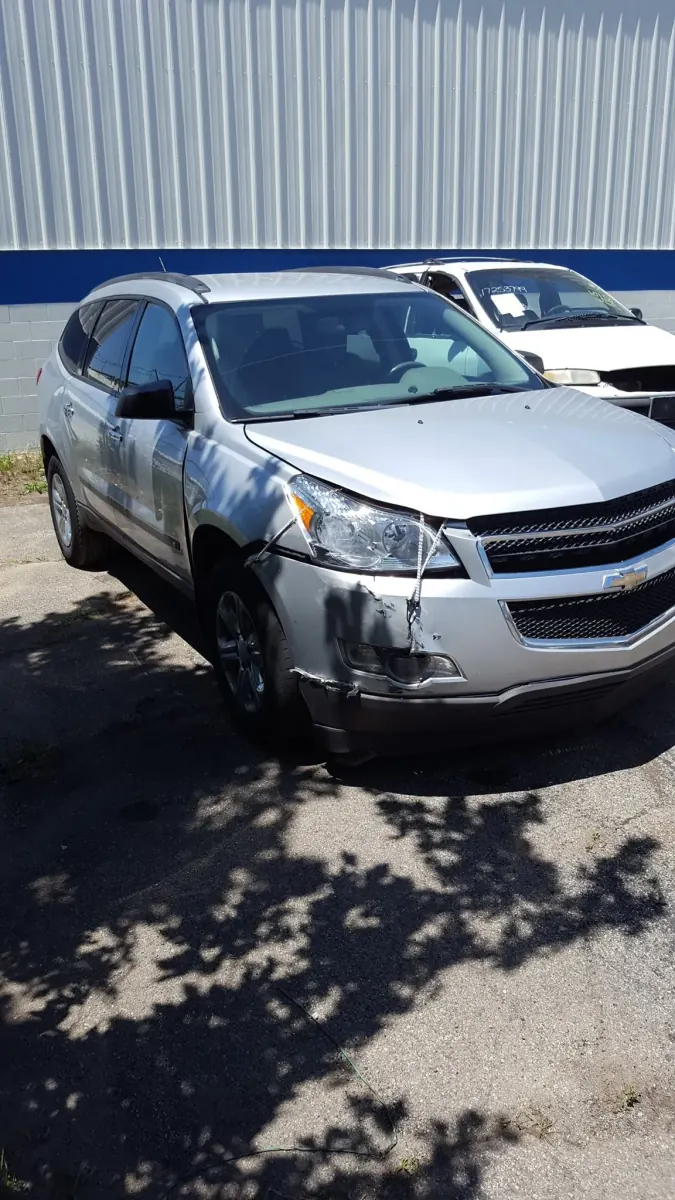
Fitment is everything on a body panel, and a used OEM panel fits because it is the OEM panel. It came off the same model, stamped on the same dies. Often it is already in your color, which can skip a $400-$1,000 paint bill (Bengkel Cat, 2026). Compare the door row in the table: a new OEM door is a bare $766 shell with no glass, no window regulator, no latch, and no door panel (iSeeCars). A used door assembly at $75-$400 comes complete. You are paying less for more.
Engines, Transmissions, and Transfer Cases
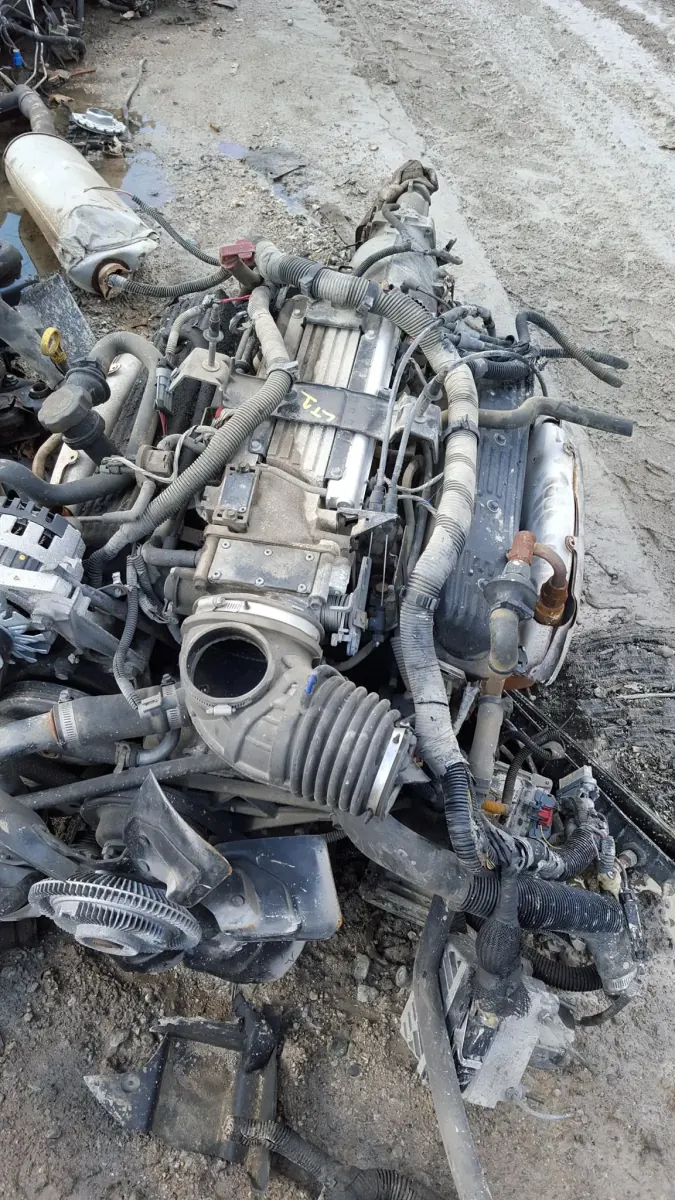
There is no new aftermarket engine. Your choices are new OEM (four to five figures), remanufactured (several thousand), or a used unit that has already proven it runs. With the average U.S. vehicle now 12.8 years old (S&P Global Mobility, 2025), a $4,000 new engine in a $5,000 truck is a bad equation. A $900 used engine with a matching engine code is what keeps that truck working. The checks that matter — code match, mileage, donor history — are in our used engine buying guide.
Headlights, Taillights, and Mirrors
Aftermarket lighting is the category where quality varies most. Lens clarity, beam pattern, seal quality, and how the tabs line up with the bumper all vary by brand, and the cheap ones fog in a year. A used OEM headlight is the factory unit: correct beam pattern, correct mounting, correct connector. On LED-equipped cars the math gets silly — a single LED headlight module on a Toyota Corolla or Subaru Forester runs $600 to $900 new (Synchrony, 2025), and the used version off the same model is a fraction of that.
Electrical Modules, Alternators, Starters, and A/C Compressors
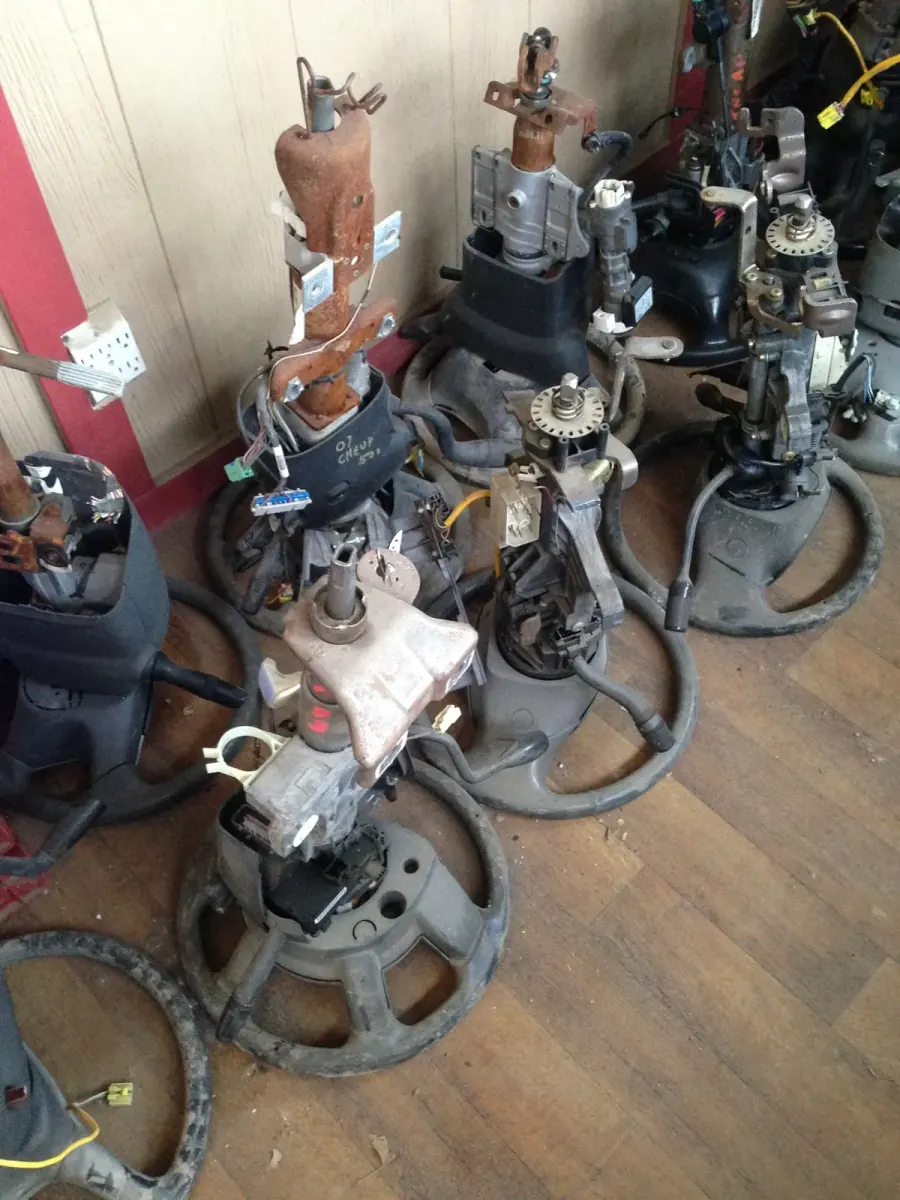
Used OEM electrical parts are cheap enough that the warranty math is easy. A used alternator is $30-$100 at our counter against $180-$500 aftermarket. Even if you distrust used electrical — and a lot of people do — the used part is protected by a 30-day warranty, so a bad one costs you a return trip, not money. Body control modules, instrument clusters, and factory radios often have no aftermarket equivalent at all, so the choice is new OEM or used OEM.
Where Used OEM Is Only “Fine”
Honest limits. A used part has history you cannot fully know. For high-labor jobs on a car you plan to keep a long time, a remanufactured unit with a longer warranty can be the smarter buy even though it costs more. And on wear items, used is never the answer — a used brake rotor is just a rotor with less life left. Our used vs. new auto parts comparison goes deeper on when new is worth the premium.
Do Aftermarket or Used Parts Void Your Warranty?
No. Under the federal Magnuson-Moss Warranty Act, a manufacturer cannot condition your warranty on using its own brand of parts or service unless it provides those parts or service free of charge (15 U.S.C. § 2302(c)). The FTC’s consumer alert on the subject says it plainly: “The Magnuson-Moss Warranty Act makes it illegal for companies to void your warranty or deny coverage under the warranty simply because you used an aftermarket or recycled part” (FTC consumer alert, reprinted by the Arizona Automotive Recyclers Association).
There is one exception, and it is a fair one. If the aftermarket or recycled part was itself defective or was installed wrong, and that failure damages a part the warranty covers, the manufacturer can deny coverage for that damage. The burden is on them to show the part caused the problem — not on you to prove it did not. So a used OEM alternator will not void your powertrain warranty. A bad install of that alternator that fries a harness might cost you the harness.
The practical advice: keep the receipt, keep the interchange number, and get the part installed correctly. That covers you.
Buying Used OEM Parts in Indianapolis
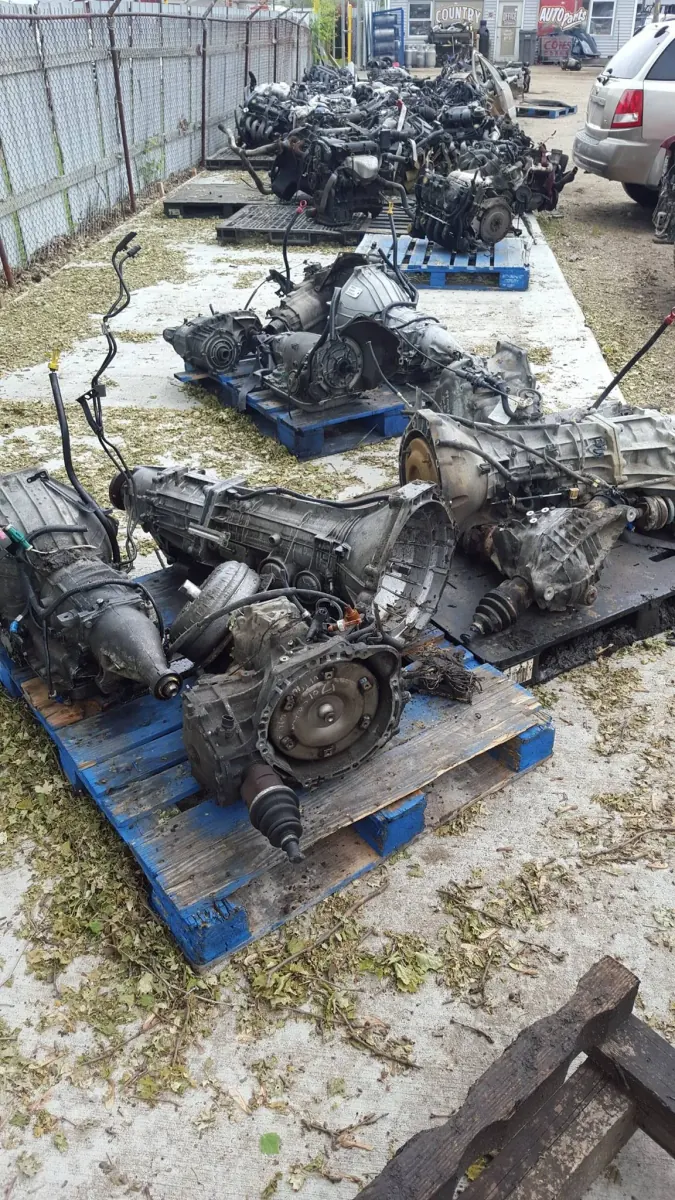
The New Country Auto Parts keeps hundreds of vehicles — domestic, European, Japanese, and Korean — at 3013 Stanley Avenue on the south side of Indianapolis, near Madison and Troy, with fresh inventory added daily. Our part-pullers find the part, pull it, and bring it to the counter; you do not need tools or a free Saturday. Prefer to pull it yourself? Ask the front desk about the self-pull discount. You can search our inventory online or call (317) 787-7555 to confirm what is in the yard today.
Every part except items sold as-is carries a 30-day warranty: if it is defective, we replace it, or issue store credit for what you paid if we no longer have one. Customers across Indianapolis, Greenwood, Franklin, Plainfield, and the rest of Central Indiana have rated us 4.8 stars across 320+ Google reviews. Hours are Monday-Friday 8 AM to 5 PM and Saturday 9 AM to 2 PM; here is what to expect when you visit. And if the repair estimate has passed what the car is worth, we buy vehicles in any condition — yours becomes the donor that saves the next person money.
Ready to compare the used OEM price? Call The New Country Auto Parts at (317) 787-7555 or stop by 3013 Stanley Ave — our part-pullers will handle the dirty work. Plan your visit →
Frequently Asked Questions
Are aftermarket parts as good as OEM parts?
Sometimes. Name-brand aftermarket wear items (pads, filters, belts) generally match OEM performance at a lower price. Quality falls off on body panels and lighting, where fit and materials vary by brand. The CAPA seal marks aftermarket parts independently tested to fit, perform, and last like the original; uncertified parts carry no such guarantee. For structural or shape-dependent parts, OEM — new or used — is the safer buy.
Are used OEM parts better than new aftermarket parts?
For body panels, lights, engines, transmissions, and electronics, usually yes. A used OEM part was made by the vehicle manufacturer on the original tooling, so it fits and functions exactly like the part it replaces. It also costs less: used OEM runs 20-80% below new (Automotive Recyclers Association), and in our price table it starts below aftermarket on all ten common parts. Aftermarket wins only on wear items.
Does using aftermarket or used parts void my car’s warranty?
No. The federal Magnuson-Moss Warranty Act (15 U.S.C. section 2302) bars manufacturers from conditioning a warranty on their own brand of parts unless those parts are provided free. Per the FTC, a company cannot void your warranty simply because you used an aftermarket or recycled part. Coverage can be denied only if that specific part was defective or installed incorrectly and caused the damage.
What does OEM mean on a car part?
OEM stands for Original Equipment Manufacturer: the company that built the part your vehicle left the factory with, either the automaker or its contracted supplier. “New OEM” means that part sold new through a dealer. “Used OEM” or “recycled OEM” means the same factory part removed from a donor vehicle at a salvage yard. Both are genuine; only the age and price differ.
Which parts should you always buy new OEM?
Single-use safety devices: airbags, seat belt pretensioners, and anything with a pyrotechnic charge. Also any repair the manufacturer is paying for under warranty. Beyond those, new OEM is a preference rather than a rule. Wear items are better bought aftermarket, and non-wear parts such as doors, fenders, lights, engines, and transmissions are usually best bought used OEM from a salvage yard with a warranty.
How much cheaper are used OEM salvage parts than new?
Typically 20-80% less than new, per the Automotive Recyclers Association. At The New Country Auto Parts a used alternator runs $30-$100 against $180-$500 aftermarket and roughly $350-$700+ new OEM. A used door assembly is $75-$400 complete, while a new OEM door shell alone lists around $766 with no glass or internals. The gap is widest on engines, transmissions, and body parts.
Do used auto parts come with a warranty?
At The New Country Auto Parts, every part except items sold as-is carries a 30-day warranty from the date of purchase. If a covered part is defective, we replace it, or issue store credit for what you paid if it is no longer in stock. The warranty covers the part only; transportation and installation are on the customer. Ask any yard for its warranty terms in writing before you buy.