Car parts recycling is the process of turning end-of-life vehicles back into parts and raw materials: fluids are drained and reclaimed, usable parts are pulled and resold, and the stripped shell is shredded and melted into new steel. Roughly 86 percent of a vehicle’s material content is recycled, reused, or recovered for energy (Automotive Recyclers Association, 2025).
Last updated: October 2026
We watch that process from the inside every day. The New Country Auto Parts is a full-service salvage yard at 3013 Stanley Avenue on the south side of Indianapolis, and recycling isn’t a feel-good extra for us — it is the business. Junk cars come in through the gate. Engines, doors, and alternators leave in customers’ trunks. Everything left over gets sorted, crushed, and sent back into the supply chain.
Most people have no idea how much machinery sits behind that. Or that the car in their driveway is the most recycled consumer product in America (Alliance for Automotive Innovation, 2025) — ahead of the paper, glass, and cans most people picture when they think about recycling. Here’s how the whole system works, what happens to each material, and why it’s worth caring about.
What Is Car Parts Recycling?
Car parts recycling — also called auto recycling or vehicle recycling — is the industry that takes cars nobody will drive again and recovers their value in three layers. First, working parts are pulled and resold as used parts. Second, rebuildable components like engines, starters, and alternators are sold as “cores” to remanufacturers, who restore them to factory spec. Third, whatever can’t be reused is shredded, and the metals are separated out and melted down for new products.
That order matters. A reusable part is worth far more than its weight in scrap steel — to the yard and to the driver who buys it — so a good recycler works down the list instead of heading straight for the crusher. If you want to follow one specific car through the system, we wrote a companion piece on what happens to your car after the junkyard buys it. This post is about the bigger machine that car disappears into.
And it’s not a new machine. The auto salvage recycling industry is over 75 years old (Indiana Department of Environmental Management, 2026) — salvage yards were reclaiming steel and reselling parts decades before the first curbside bin existed. The green label came later. The economics were always there.
How Does Car Recycling Work? From Junk Car to New Steel
Across the industry, the auto recycling process follows the same basic sequence:
- A vehicle reaches the end of its life. Wrecked, flooded, blown engine, or just not worth the next repair bill. Yards buy these vehicles from insurance companies, auctions, tow companies, and directly from owners — our sister company Cash Car Heroes pays cash for junk cars across Central Indiana, free towing included.
- It gets logged and assessed. The yard records the VIN, handles the title paperwork, and decides where the vehicle is worth more: as a parts donor or as scrap.
- Every fluid comes out. Gasoline, motor oil, coolant, transmission fluid, brake fluid, washer fluid, and refrigerant are drained and captured before the vehicle goes anywhere near the yard rows. The battery and mercury switches come out too. This is the depollution step, and it carries the most environmental weight of the six.
- Usable parts are harvested. Engines, transmissions, doors, bumpers, lights, alternators, wheels — whatever has resale demand comes off and goes into inventory. At a full-service yard like ours, staff part-pullers handle the removal.
- Cores go to remanufacturers. Worn-out engines, starters, and alternators are sold to companies that rebuild them to original specifications and resell them with warranties.
- The hull is crushed and shredded. What remains is flattened, shipped to an industrial shredder, and torn into fist-sized pieces. Magnets and separation systems pull steel, aluminum, and copper away from plastic and foam, and the metal heads to mills as raw material.
How long does it take to recycle a car?
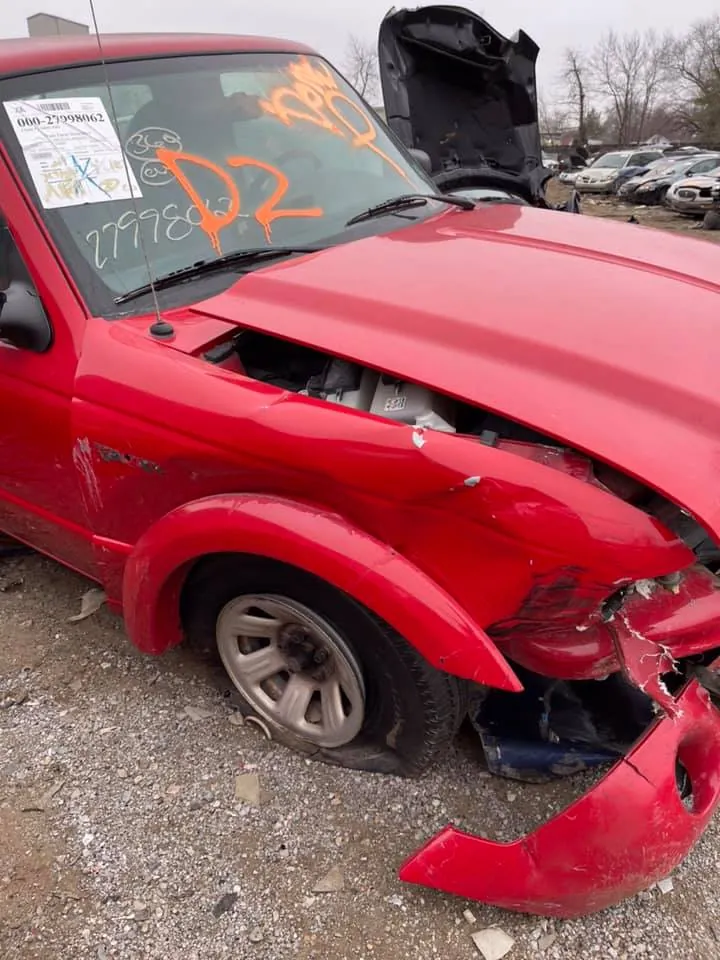
Longer than people assume — and that’s a feature, not a flaw. Depollution happens up front, but a vehicle with good parts doesn’t go to the crusher the next morning. It sits in the yard rows as a parts donor, sometimes for months, giving up a door here and an alternator there for as long as there’s demand. Only when a vehicle has been picked over does it make its final trip to the shredder. The slower a car moves through a salvage yard, the more of it gets reused instead of melted — which is exactly what you want.
Got a car that’s reached the end of the road? We’ll put it back to work. Get a cash offer with free towing anywhere in Central Indiana. Sell your car →
What Happens to Each Part of a Recycled Car?
Different materials take very different paths once a vehicle is dismantled. Here’s where the major ones end up:
| Material or part | Where it goes | Worth knowing |
|---|---|---|
| Steel body and frame | Shredded, pulled out by magnet, melted into new steel | Each ton of recycled steel saves 2,500 lbs of iron ore, 1,400 lbs of coal, and 120 lbs of limestone (ARA, 2025) |
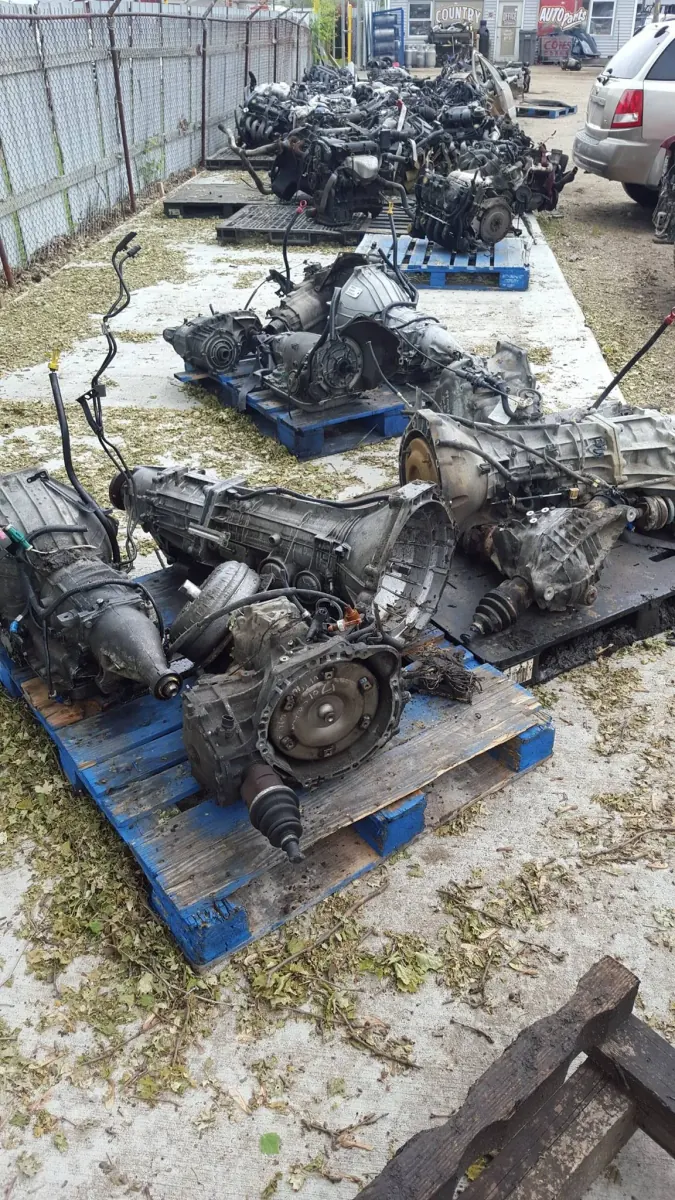
| Engines and transmissions | Resold as used parts, or rebuilt by remanufacturers | Usually the most valuable items on the vehicle |
| Lead-acid batteries | Broken down into lead, plastic, and acid for reuse | 96% of lead-acid batteries are recycled (ARA, 2025) |
| Fluids | Drained, captured, then re-refined or reused | Recyclers reclaim about 24 million gallons of motor oil a year (ARA, 2025) |
| Catalytic converters | Sent to refiners who recover the precious metals inside | Platinum, palladium, and rhodium make them a frequent theft target |
| Tires | Resold if serviceable; otherwise turned into crumb rubber and fuel | Never landfilled at a responsible yard |
| Wheels | Resold as used OEM wheels, or melted as aluminum scrap | Straight factory wheels sell fast as used parts |
| Glass, plastics, foam | Partially recovered during shredding | The industry’s weak spot — much of it still lands in landfills |
That last row is the honest limitation. The 86 percent recovery figure is real, but the remainder — shredder residue, mostly mixed plastics, foam, and fabric — still goes to landfills. Nobody in this business has fully solved that problem yet, and anyone who tells you a car is 100 percent recycled is selling something.
How Big Is the Auto Recycling Industry?
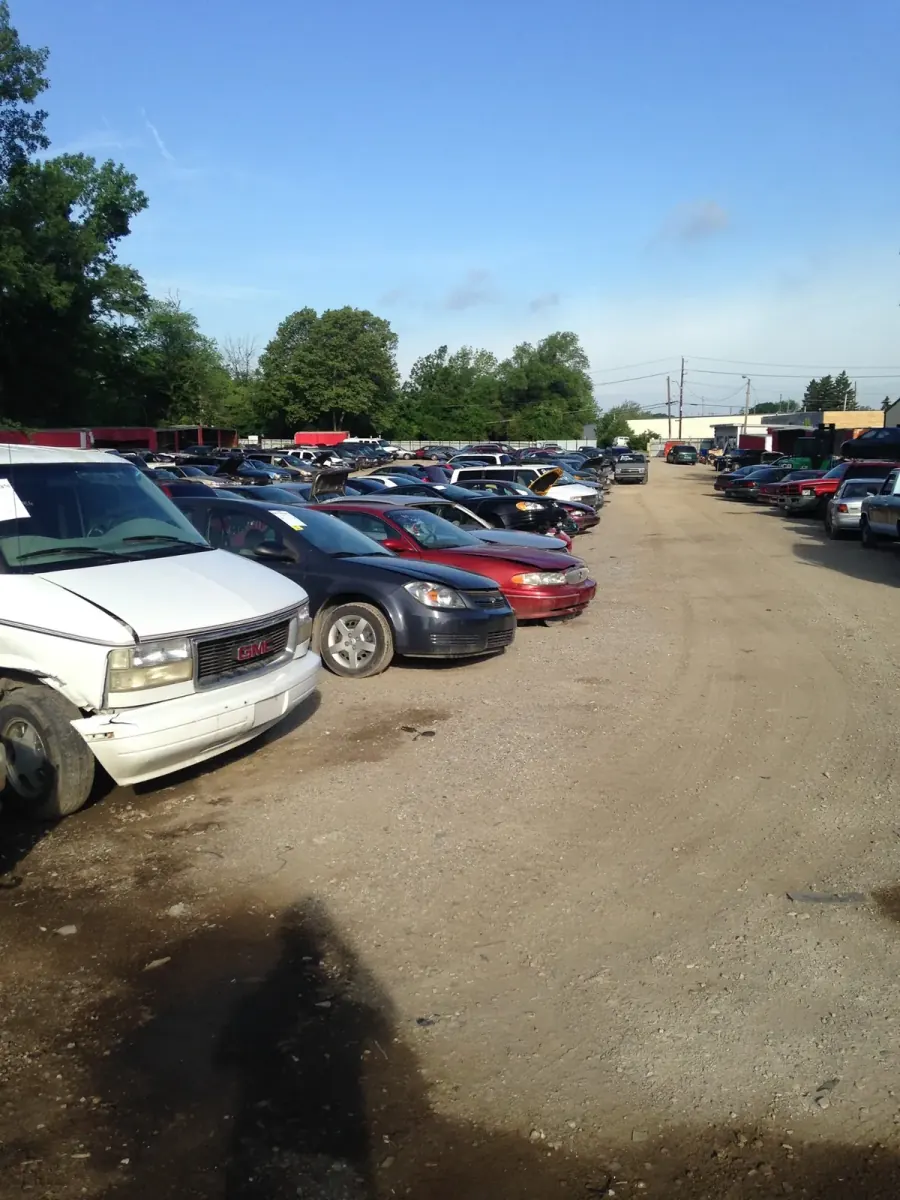
Bigger than almost anyone guesses. Automotive recyclers process over 12 million vehicles per year, and the industry ranks as the 16th largest in the U.S., valued at an estimated $32 billion (Automotive Recyclers Association, 2020). It employs more than 140,000 people at over 9,000 locations nationwide (ARA, 2025).
It’s also remarkably thorough. About 95 percent of retired passenger vehicles are processed for recycling every year (Alliance for Automotive Innovation, 2025). Compare that to the paper, cans, and bottles in your curbside bin — nothing else you own comes close. The system works because a dead car has real value at every layer, which means nobody has to be talked into recycling it.
Why Does Auto Recycling Matter?
What does auto recycling do for the environment?
Start with what it keeps out of the ground. A single end-of-life vehicle holds gallons of fuel, oil, coolant, and other fluids, and every one of them is a groundwater problem if the car rots in a field instead of going through depollution. Industry-wide, recyclers capture about 8 million gallons of gasoline and diesel, 24 million gallons of motor oil, 8 million gallons of engine coolant, and 5 million gallons of windshield washer fluid every year (Automotive Recyclers Association, 2025).
Then there’s the material itself. Recycled steel means less mining, less coal, and less energy than making steel from ore — those per-ton savings in the table above add up fast when the industry feeds millions of tons of shredded auto steel back to the mills each year.
How does recycled steel get back into new cars?
Shredded auto steel goes to mills, gets melted, and comes back as new products — including new vehicles. Policymakers are starting to push for more of exactly that loop. According to Fynn Hauschke, Senior Policy Officer at the European Environmental Bureau, “Binding targets for recycled steel in new vehicles are key to decarbonise automotive production, and boost Europe’s resilience by fast-tracking high-quality, closed-loop recycling” (Auto Recycling World, 2025).
Europe debates the mandates; the yards do the work either way. Every vehicle we process on Stanley Avenue ends the same way — its steel back in the furnace, headed for another life as something new.

How does auto recycling save drivers money?
This is the part that lands closest to home. Every used part on our shelves is a part nobody had to manufacture, ship, or mine material for — and that shows up in the price. A used door, alternator, or engine typically costs a fraction of its brand-new equivalent, which is the difference between fixing a car and giving up on it for a lot of Indianapolis drivers. We broke down the price math in our used vs. new auto parts comparison if you want the numbers.
Need a part, not a lecture? Search our inventory online or call (317) 787-7555 and we’ll check the yard while you’re on the phone — our part-pullers do the removal once you get here, and most parts carry a 30-day warranty. Find your part →
Who Handles Auto Recycling in Indianapolis?
In Indiana, auto salvage recyclers operate under the Indiana Department of Environmental Management, which oversees licensing, fluid and hazardous-waste handling, and even a dedicated program for recovering mercury switches from old vehicles (IDEM, 2026). The state also runs a voluntary Clean Yard program that recognizes yards going beyond the minimum. This is regulated industrial work — a world away from the lawless-junkyard image people carry around.
At The New Country Auto Parts, every vehicle is drained of fluids and hazardous materials before it’s placed in the yard. Freon is recovered, mercury switches are pulled, tires are recycled, and the leftover metals are sorted and sent on. And because our family of companies covers the whole chain — Cash Car Heroes buys the vehicles, our yard sells the parts, and Indy Pickup 1111 — home of the $11 pickup — hauls scrap metal and old appliances across Central Indiana for a flat $11 base fee — a car that enters at one end leaves as parts, steel, and scrap at the other. You can book that $11 scrap pickup through us directly.
You’ll find the yard at 3013 Stanley Avenue, near the Madison Avenue and Troy Avenue intersection on the south side — open Monday through Friday 8 AM to 5 PM and Saturday 9 AM to 2 PM.
Is Buying Used Auto Parts Good for the Environment?
Yes — and here’s our opinionated take: reuse beats recycling, every single time. Melting a door into new steel takes energy. Bolting that same door onto another truck takes a socket set. When you buy a used part, you’re skipping the furnace, the mill, and the factory entirely — it’s the most direct way a regular driver participates in any of this.
Picture the actual swap. A deer takes out your Silverado’s passenger door. The new-door route means fresh steel, new paint, a factory, and a freight truck before it ever reaches you. The used route means a door that already exists — same factory fit, pulled from a donor truck a few rows back — at a fraction of the cost. Multiply that by the hundreds of vehicles in our yard and you get the quiet environmental math of this business. Come walk the yard and you can see it for yourself.
“Reduce, reuse, recycle” is written in that order on purpose. The used parts business is the “reuse” layer of the auto industry, and it was running strong in Indianapolis decades before anyone called it green.
Frequently Asked Questions
What percentage of a car can be recycled?
About 86 percent of a vehicle’s material content is recycled, reused, or recovered for energy (Automotive Recyclers Association, 2025). The remainder is mostly shredder residue — mixed plastics, foam, and fabric that current technology can’t economically separate. That recovery rate makes automobiles the most recycled consumer product in America (Alliance for Automotive Innovation, 2025).
How many cars are recycled each year in the US?
Automotive recyclers process over 12 million vehicles per year in the United States (Automotive Recyclers Association, 2020), and about 95 percent of retired passenger vehicles enter the recycling system annually (Alliance for Automotive Innovation, 2025). Put simply: when a car in America reaches the end of its life, it almost always gets recycled.
What happens to the fluids in a junk car?
They are drained and captured before dismantling begins. Industry-wide, recyclers reclaim roughly 24 million gallons of motor oil, 8 million gallons of fuel, 8 million gallons of coolant, and 5 million gallons of washer fluid every year (Automotive Recyclers Association, 2025). At The New Country Auto Parts, every vehicle is drained before it reaches the yard rows.
Do you get paid when your car is recycled?
Yes. Salvage yards pay for end-of-life vehicles because the parts and metal hold real value. Our buying arm, Cash Car Heroes, pays cash or check on the spot for cars in any condition, with free towing across Central Indiana — so recycling your car is a payday, not a disposal fee.
Which car parts can be reused instead of melted down?
More than most people expect: engines, transmissions, alternators, starters, doors, bumpers, lights, mirrors, wheels, seats, and electronic modules are all commonly resold as used parts. Worn engines and alternators also get rebuilt to original specifications by remanufacturers. Melting is the last resort — reuse pays better and wastes less.
What is the difference between a junkyard, a salvage yard, and an auto recycler?
Mostly the label. All three describe the same business at different levels of polish. The industry prefers “auto recycler” because that is what the work actually is: draining, dismantling, reselling, and recycling vehicles under environmental oversight — in Indiana’s case, licensing and waste rules administered by IDEM (2026).
Does The New Country Auto Parts recycle cars?
Every day. We buy end-of-life vehicles through Cash Car Heroes, drain and recycle the fluids, pull and sell the usable parts, and send the remaining metal back into the supply chain. Visit us at 3013 Stanley Avenue in Indianapolis, Monday through Friday 8 AM to 5 PM or Saturday 9 AM to 2 PM, or call (317) 787-7555.
A junk car is not trash — it never was. It’s a rolling warehouse of parts, steel, and reclaimable fluids, and the auto recycling industry exists to take it apart in the right order. That’s the work we do on Stanley Avenue every day the gate is open.
Keep your next repair out of the landfill. Buy the part that already exists — call (317) 787-7555 or stop by 3013 Stanley Avenue. Talk to us →