After a junkyard buys your car, it moves through a five-step auto recycling process: the sale is reported to a federal database and the title branded as junk, every fluid is drained and recycled, sellable parts come off and go into inventory, the stripped hull is crushed, and the metal is melted down into new steel.
Last updated: September 2026
You hand over the keys, the tow truck pulls away, and the car you drove for a decade disappears behind a gate on the industrial side of town. Then what? Most people picture a crusher and leave it there. The real answer is longer, more organized, and honestly more interesting — and since we run this exact operation every day at The New Country Auto Parts on the south side of Indianapolis, we can walk you through it from the inside instead of guessing.
What Are the Steps in the Auto Recycling Process?
Every car that comes through our gate follows the same basic path, whether it arrived on a flatbed from a Cash Car Heroes pickup, an insurance auction, or a customer who drove it in on its last legs:
- Intake and paperwork. The title transfers, the sale is reported to the federal title database, and the VIN picks up a junk brand.
- Depollution. Fuel, oil, coolant, refrigerant, the battery, and mercury switches all come out before the car goes anywhere near the yard rows.
- Parts inventory. The vehicle is logged, graded, and placed in a row with others of its make and model so sellable parts can be pulled.
- Crushing. Once demand for its parts dries up, the stripped hull is crushed flat.
- Shredding and metal recovery. The crushed hull is shredded, the metals are sorted, and the steel goes back to mills to become new steel.
The rest of this post walks each step in detail, including the parts nobody outside the industry talks about — like how we decide which cars get parted out and which go straight to the crusher.
Step One: The Title Gets Branded Before Anything Else Happens
The first thing that happens to your car has nothing to do with wrenches. It happens at a desk. When a salvage yard buys a vehicle to dismantle it, the title is processed as a junk vehicle — and under federal rules, junk and salvage yards must report every vehicle they acquire to the National Motor Vehicle Title Information System (NMVTIS), the U.S. Department of Justice database that tracks totaled and junked cars. That report attaches a junk brand to the VIN, and it exists to stop a specific scam: rebuilding a wreck, washing the title in another state, and selling it to an unsuspecting buyer.
So the honest answer to “could my old car end up back on the road?” is no — not once a yard takes it in to dismantle. That junk brand follows the VIN through every state that checks NMVTIS before issuing a title. One thing worth being straight about: a wrecked car carrying a salvage title is a different path entirely, since it can be rebuilt, pass an Indiana State Police inspection, and come back branded “REBUILT VEHICLE.” The car we buy to part out doesn’t go down that road. Its parts, though, can live on in dozens of other vehicles, which is the entire point of what happens next. Our guide to Indiana vehicle title laws at salvage yards covers the difference, what you need to bring, and what to do if the title is missing.
Parts Car or Crush Car? How the Yard Decides
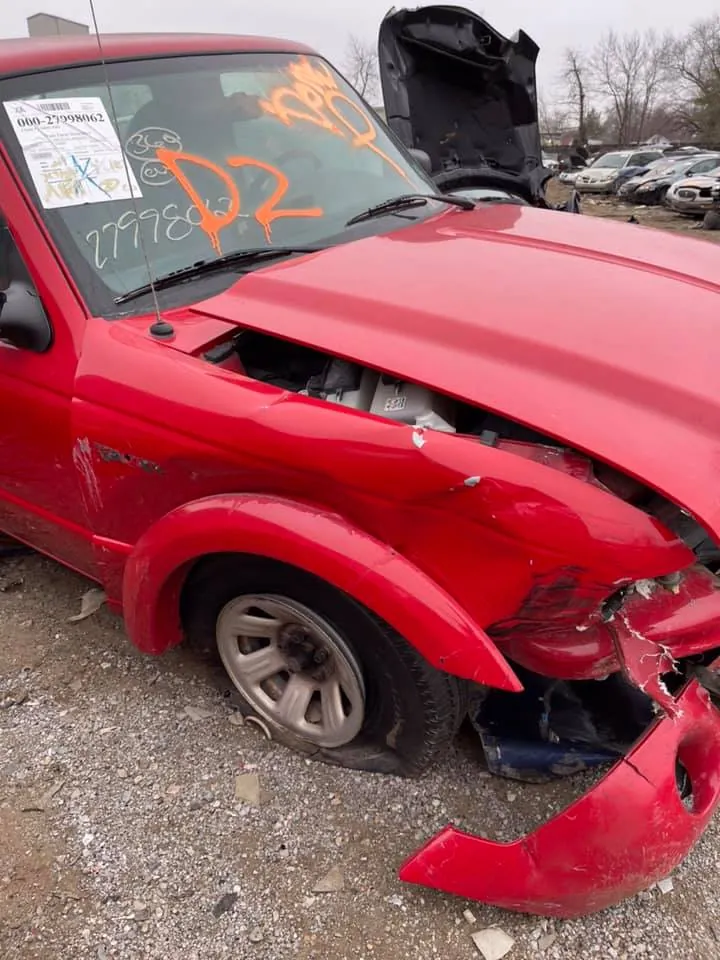
Here’s the step no ranking article explains, because you have to work at a yard to see it: not every car we buy goes into the parts inventory. Every vehicle gets a quick evaluation at intake, and it forks one of two ways.
Some cars earn a spot in the rows. A truck or SUV with clean body panels, a running drivetrain, and a model year people are still repairing is worth far more as parts than as scrap metal. Those vehicles get drained, logged, and parked in a row with others of the same make — and their most valuable parts (engine, transmission, doors, tailgates, wheels) start selling sometimes within days.
Some cars go straight to scrap. A rusted-out sedan from a model nobody repairs anymore, a burn car, a flood car — there’s no demand for those parts, so spending labor to inventory them would be throwing money away. They’re depolluted and crushed on a much faster clock.
That fork is also why two similar-looking junk cars fetch different prices at the gate. A yard pays for what it can sell, and parts demand is the biggest variable — we broke down that math in how much junkyards pay for cars. If you’re weighing whether your own car is closer to “parts gold” or “scrap weight,” our post on when to junk your car can help you call it.
What Happens to the Fluids Drained From a Junk Car?
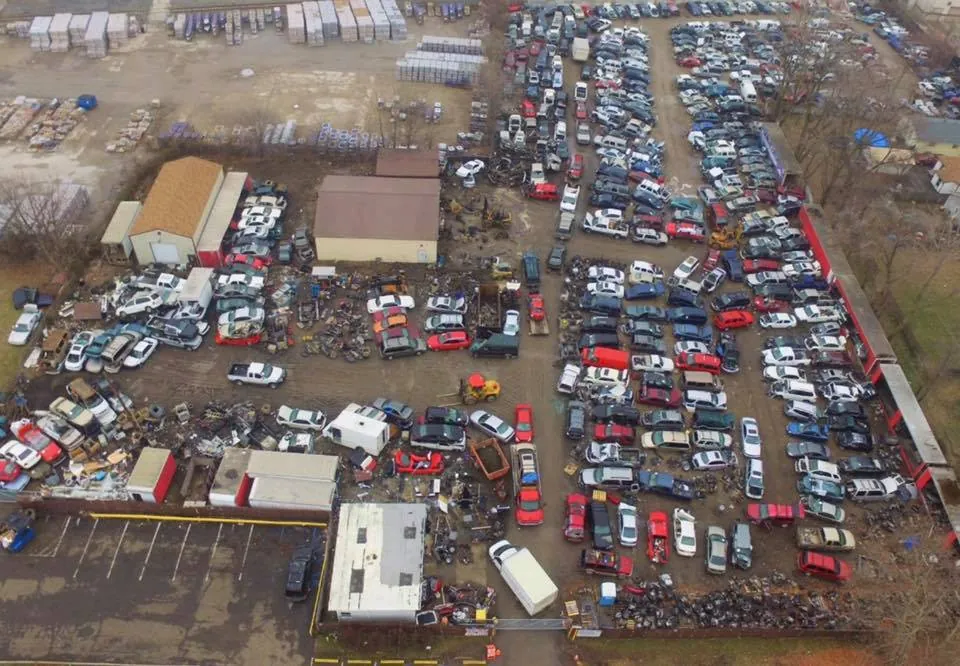
Before any vehicle touches our yard rows, it gets depolluted — every fluid and hazardous material comes out. This is the step that separates a licensed salvage operation from a field full of leaking cars, and it’s done with the hood up and pans out, one system at a time. At The New Country Auto Parts, all fluids and hazardous materials are drained and recycled before a vehicle is placed in the yard, and the national numbers show how much material that adds up to across the industry (Automotive Recyclers Association):
| What comes out | Where it goes |
|---|---|
| Gasoline and diesel | Recovered and reused — auto recyclers reclaim about 8 million gallons a year nationally |
| Motor oil | Collected for recycling — about 24 million gallons a year industry-wide |
| Engine coolant | Captured and recycled — about 8 million gallons a year |
| Windshield washer fluid | Recovered — about 5 million gallons a year |
| A/C refrigerant (freon) | Pulled with recovery equipment so it never vents to the air |
| Battery | Removed and recycled — 96% of lead-acid batteries are recycled |
| Mercury switches | Removed before crushing so mercury stays out of the steel furnaces |
| Tires | Pulled and sent to tire recycling |
The five national volume figures in that table come from the Automotive Recyclers Association’s industry statistics; refrigerant, mercury switches, and tires are handled the same way but the ARA does not publish annual totals for them. The takeaway is simple: the “toxic junkyard” image is decades out of date. A modern salvage yard is a drain-first operation because it has to be — and because every one of those fluids is worth more recovered than spilled.
Got a car ready for this process? The New Country Auto Parts pays cash for vehicles in any condition, with free towing across Central Indiana. Get an offer for your car →
What Happens to the Parts? Weeks or Months on the Row
Once a vehicle is drained and logged, it becomes inventory. At our yard, vehicles are grouped by make and model, and fresh ones are added daily — which means the rows are always turning over. When a customer calls for a Silverado door or an Accord alternator, our part-pullers walk out, pull it, and bring it to the counter; if you’d rather pull it yourself, ask about the self-pull discount. Every part that isn’t sold as-is carries a 30-day warranty — free replacement if it fails, or store credit for what you paid if we no longer stock the part.
This stage is the economic engine of the whole system. Recycled original-equipment parts sell for a fraction of new-part prices — we published exactly how used auto parts are priced if you want the formula — and that affordability is why the industry exists at the scale it does. As Vince Edivan, Executive Director of the Automotive Recyclers Association, put it in 2026: “For decades, automotive recyclers have embodied the principles behind right to repair by providing affordable, sustainable access to quality OEM parts.”
How long does a car stay on the row? Honest answer: there is no fixed schedule, and any yard that gives you one is rounding. A high-demand truck can keep selling parts for months. A stripped sedan whose calls have gone quiet might be next in the crush queue within weeks. Demand decides, not the calendar.
What Happens When the Car Gets Crushed?
Eventually every vehicle reaches the same last day: the sellable parts are gone, the row space is worth more than the remaining metal, and the hull goes to the crusher. The crusher flattens the shell so it can be stacked and hauled efficiently — that’s all it does. The real transformation happens at the next stop, the shredder, where the flattened hulls are torn into fist-sized pieces in seconds. Magnets pull out the steel, eddy-current separators kick out aluminum and copper, and the sorted metal streams are sold to mills and smelters.
The scale of that last step is hard to picture. The steel industry recycles more than 14 million tons of steel from end-of-life vehicles every year — roughly the steel content of 8.5 million new cars — and the steel in automobiles is recycled at a rate near 100% (American Iron and Steel Institute). An Argonne National Laboratory report puts it plainly: more than 95% of the 10 to 15 million vehicles scrapped in the U.S. every year enter the recycling infrastructure rather than being abandoned or buried (Argonne National Laboratory, 2011). Your next car almost certainly contains pieces of somebody’s last one.

How Much of a Car Actually Gets Recycled?
You’ll see “80% of a car is recyclable” repeated all over the internet, usually without a source. The verified numbers actually bracket that figure. The EPA has put it at about 75% of a vehicle by weight — the metal content — with over 10 million vehicles headed to salvage yards and scrap facilities each year (EPA, archived). The Automotive Recyclers Association puts it higher: approximately 86% of a vehicle’s material content is recycled, reused, or recovered for energy (ARA). The gap between the two is mostly definitions — metals only versus everything that avoids the landfill.
Either way, the automobile is the most recycled consumer product there is (American Iron and Steel Institute), and the industry behind it is bigger than most people guess: over 4 million vehicles professionally recycled a year across the U.S. and Canada, from more than 9,000 U.S. locations generating $32 billion in sales (ARA). The stubborn remainder — shredder residue made of plastics, foam, and glass — is the piece the industry still hasn’t fully solved, and we won’t pretend otherwise.
One Yard, Three Brands: The Full Circle on Stanley Avenue
At our lot at 3013 Stanley Ave, the whole lifecycle happens under one family of brands. Cash Car Heroes buys the vehicles — any condition, offers in 10-15 minutes between 8am and 8pm, free towing across Central Indiana. The New Country Auto Parts drains them, rows them, and sells the used parts with part-pullers on staff and hundreds of vehicles in stock. And Indy Pickup 1111 handles the scrap side, including $11 scrap metal and appliance pickup across Central Indiana — 4.9 stars across 2,100+ Google reviews. Metal that leaves your driveway as a dead washer and metal that leaves our yard as a crushed hull end up in the same recycling stream.
That’s the answer to “what happens to your car after the junkyard buys it”: nothing disappears. The title dies, the fluids get recycled, the parts keep other cars on the road (320+ Google reviews at 4.8 stars say we handle that part right), and the steel comes back as somebody’s new appliance, beam, or car body.
See the yard for yourself. Visit The New Country Auto Parts at 3013 Stanley Ave, Indianapolis — Mon–Fri 8–5, Sat 9–2 — or call (317) 787-7555 to check a part before you drive. Plan your visit →
Frequently Asked Questions
What happens to a car after the junkyard buys it?
The car’s title is retired and reported to the federal NMVTIS database, all fluids and hazardous materials are drained and recycled, sellable parts are pulled and sold over weeks or months, and the stripped hull is crushed and shredded. The recovered steel and other metals are melted down and used to make new products, including new cars.
Do junkyards crush cars right away?
Usually not. Vehicles with in-demand parts go into inventory first — at a full-service yard like The New Country Auto Parts, a popular truck can sell parts for months before crushing. Cars with no parts demand, like rusted-out or burned vehicles, are drained and crushed much sooner. Demand for the parts, not a schedule, decides the timing.
Can a junked car ever go back on the road?
Not once a yard buys it to dismantle. Junk and salvage yards must report every vehicle they acquire to NMVTIS, the U.S. Department of Justice title database, which brands the VIN as junk so states will not retitle it for road use. A separate salvage-titled wreck can still be rebuilt and inspected. The parts are always legal to resell.
What happens to the fluids drained from a junk car?
They’re recovered and recycled, not dumped. Industry-wide, auto recyclers reclaim about 8 million gallons of fuel, 24 million gallons of motor oil, 8 million gallons of coolant, and 5 million gallons of washer fluid every year, according to the Automotive Recyclers Association. Refrigerant is captured with recovery equipment, and 96% of lead-acid batteries are recycled.
How much of a car is recycled?
Between roughly 75% and 86%, depending on how you count. The EPA put the recycled share at about 75% of vehicle weight — the metals — while the Automotive Recyclers Association counts approximately 86% of material content as recycled, reused, or recovered for energy. The unrecycled remainder is mostly shredder residue: plastics, foam, and glass.
Where does the metal from crushed cars go?
Crushed hulls are shredded, then magnets and separators sort the steel, aluminum, and copper into clean streams sold to mills and smelters. The steel industry recycles more than 14 million tons of steel from end-of-life vehicles annually — about the steel content of 8.5 million new cars — per the American Iron and Steel Institute.
Do you get paid when your car is recycled?
Yes. Salvage yards pay cash for junk vehicles because the parts and metal have real resale value. What you’re offered depends on the vehicle’s weight, current scrap prices, and — the biggest factor — demand for its parts. In Central Indiana, The New Country Auto Parts buys cars in any condition with free towing; call (317) 787-7555 for an offer.